Departing from Iceland to Greenland #2
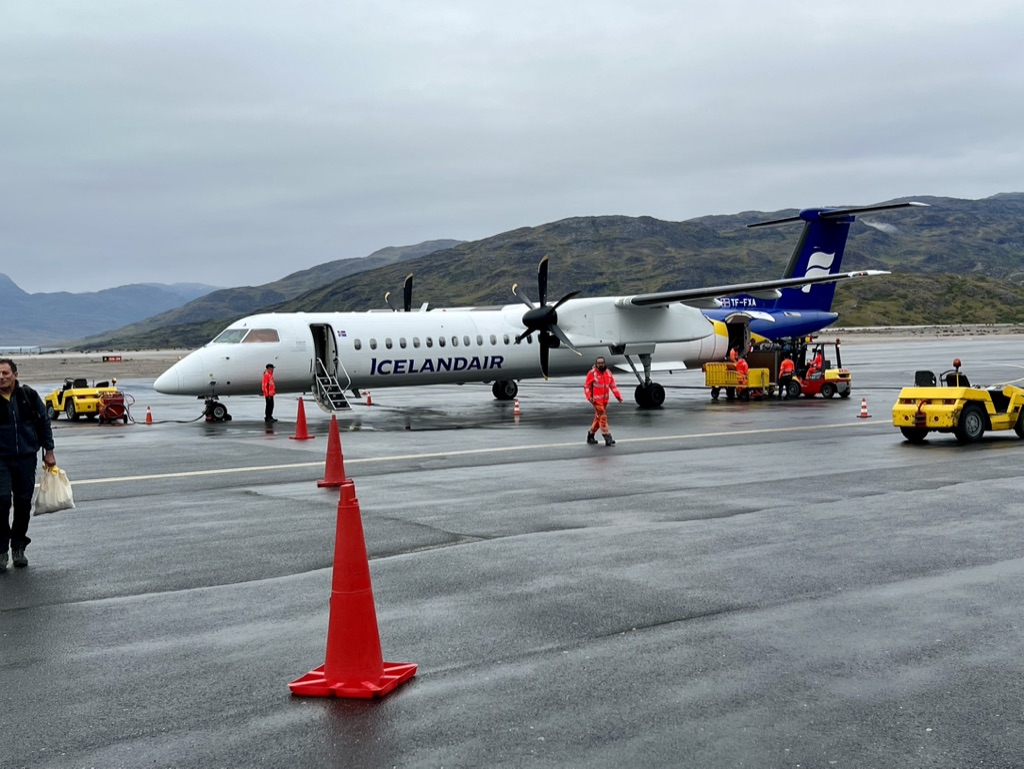
While Tom, having aborted his plans to travel to Greenland, stayed behind in Iceland, recuperating for 2 more days before his return flight to the US, I proceeded on with the original plans. Leaving from Reykjavik Domestic Airport, the 2 ½ hour flight arrived on time in Narsarsuag, Greenland located in the southern end of the country.
Narsarsuag is a very small settlement that is nestled in between mountains on the shore of a fjord which backs up toward the mountains. Flying in, the turboprop plane skimmed down low over the mountains, a glacier and through a short, narrow valley before touching down on the landing strip that extends out along the fjord.
This little town once was an American Army airbase during World War ll. The only real remnant of those days is the airfield from which bombers and fighter jets flew in and out. The base was operational by the US Air Force until about 1958.
One of our guides, Paula, met me in the small terminal and had me wait for the other arrivals. In total there were 10 of us, Graham and Maralyn from Scotland and 7 others all from Spain. Most of the Spaniards spoke at least some English. Paula spoke Spanish and English.
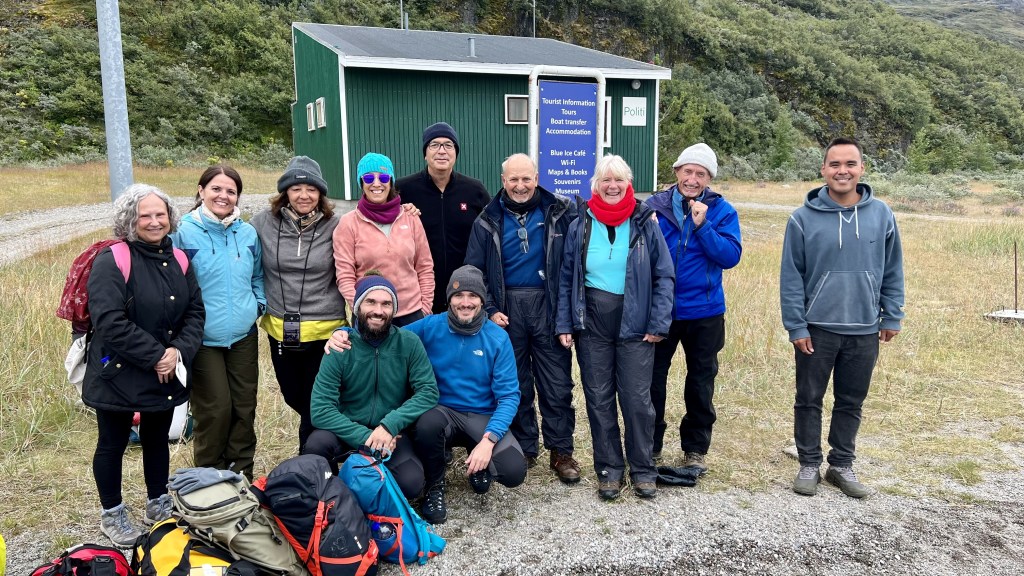
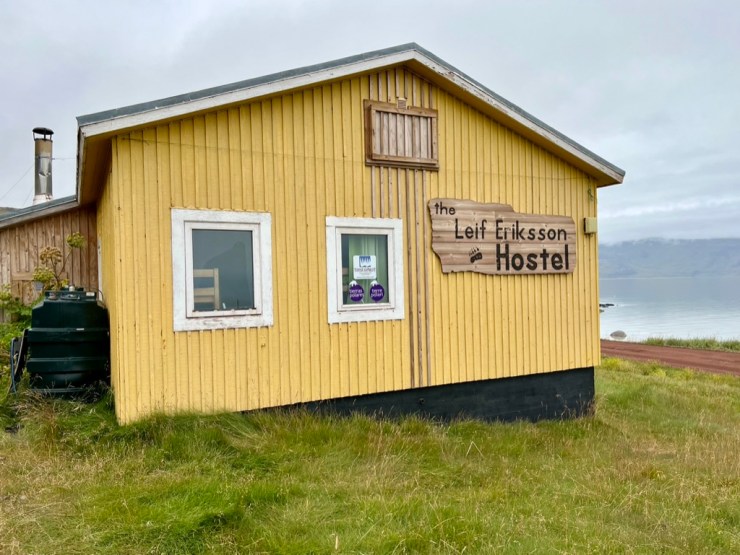
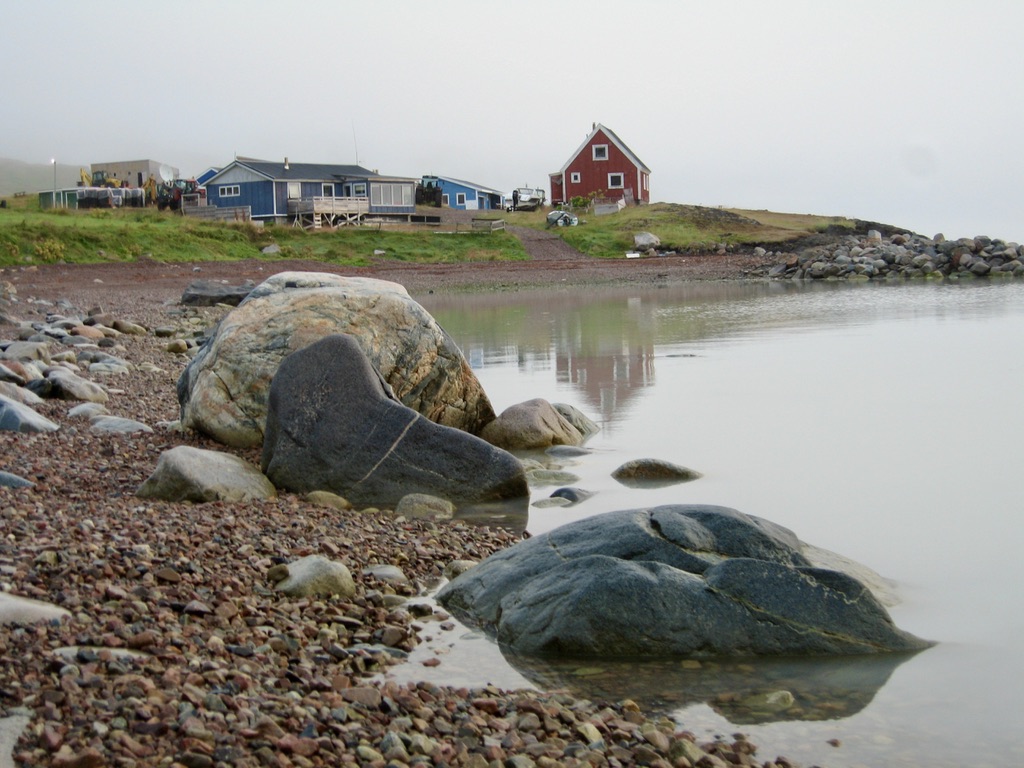
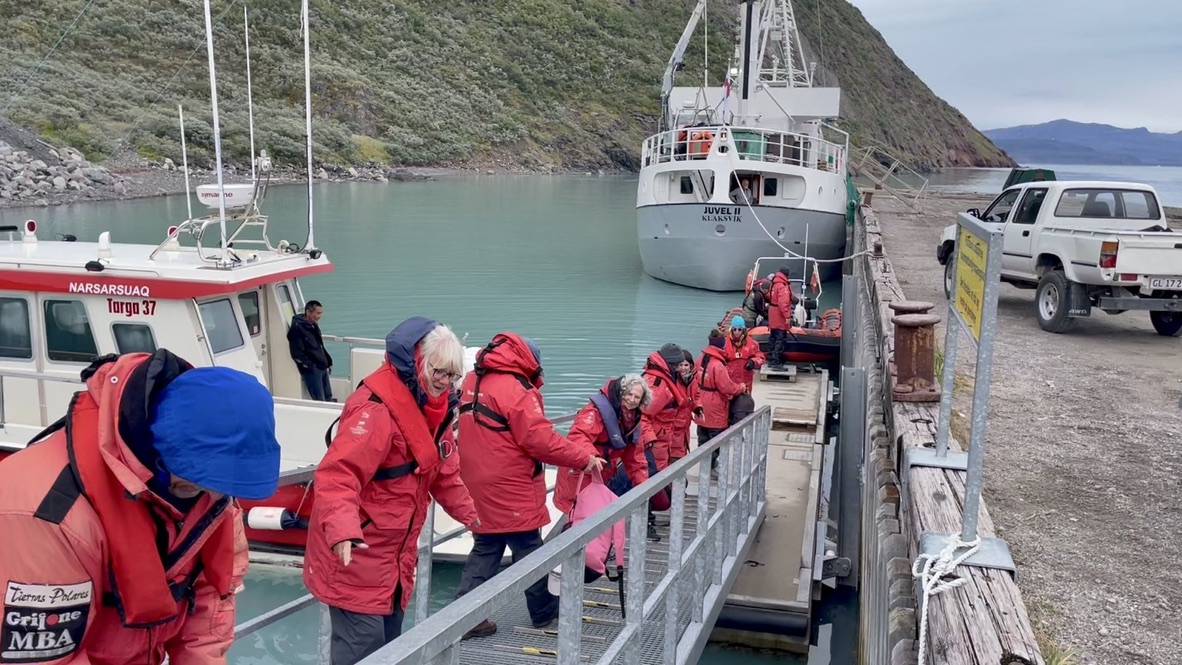
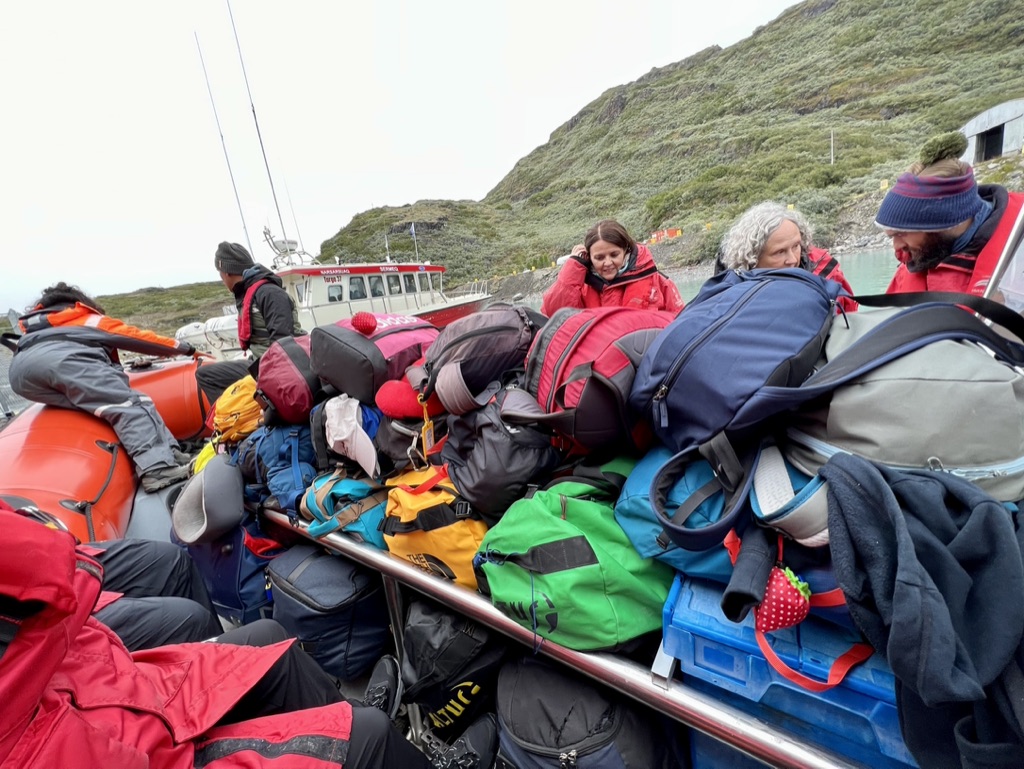
Outside the small terminal we gathered and met our local guide Kunuk before loading our luggage on a trailer that preceded us on about a mile walk to the harbor. Heavy hooded coats (I will call expedition coats) and life vests were doled out and donned before we formed a chain line loading a zodiac boat that would then carry us over the fjord to Qussiarsuk a smaller settlement across from Narsarsuag. Initially known as Brattahlid in the time of the vikings, it was there that we would stay in the Leif Eriksson Hostel.
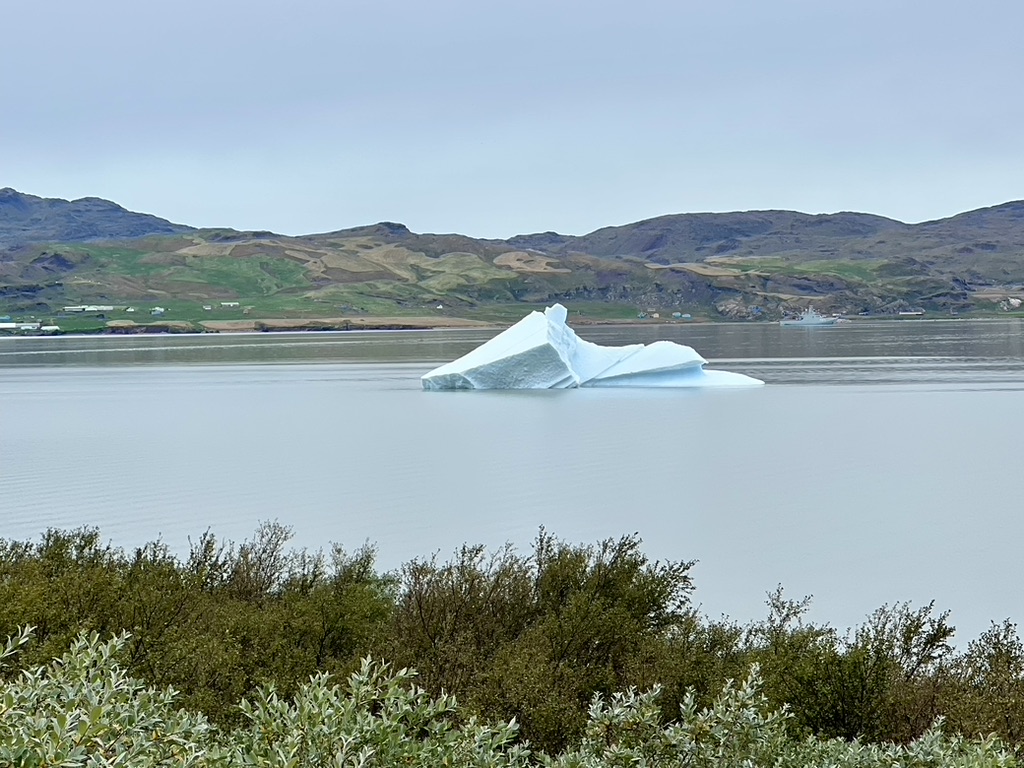
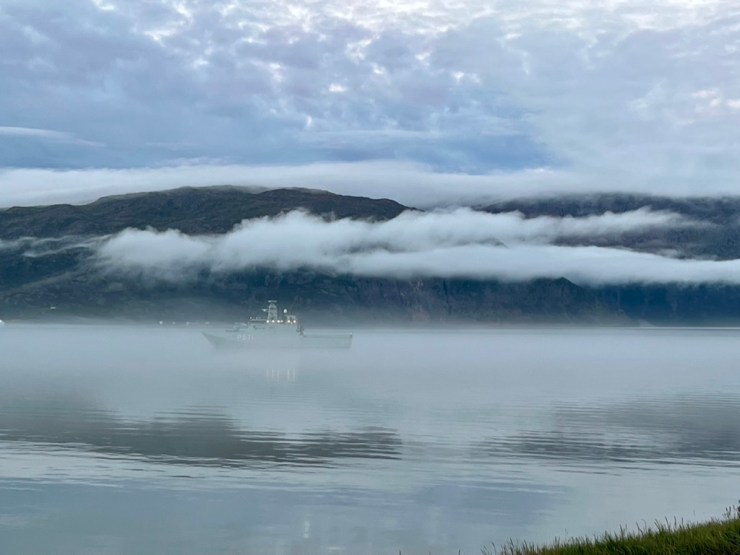
Anchored offshore in the fjord, between Narsarsuag on one side of and Qussiarsuk on the other side of the fjord was a small naval ship bearing the marking P571. Was this the Greenland Navy? Well, no, not exactly. Greenland is a protectorate of Denmark, therefore the ship was Danish. Presumably the Danes patrol the waters around Greenland, this ship being in residence in this fjord a short time while we were there.
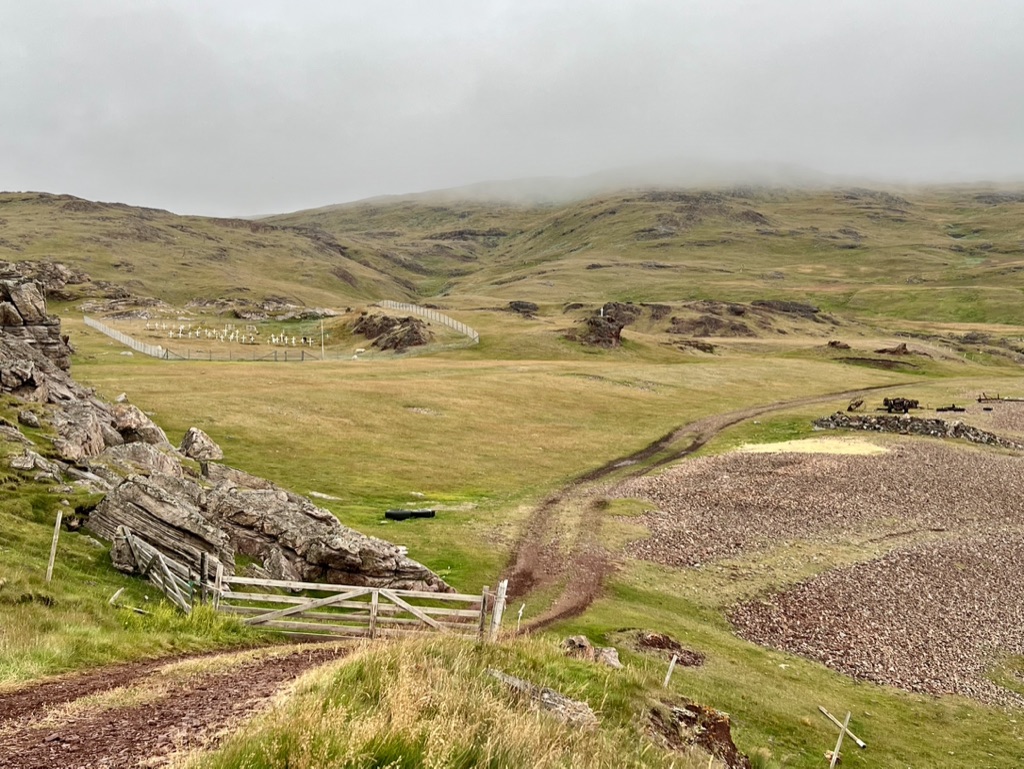
One of the first things to notice was how green it was. This is true around the edges of Greenland, but higher up the mountains become more barren and higher still dappled with snow and yet higher, topped with snow. Further north, less green, more snow and icecap. The green comes from the grasses growing there, much like Iceland. They do not refer to it as hay, as it really is grass. Also, as in Iceland, the grass is baled in rolls and sheep roam and feed freely on the grasses. Some horses were seen also. Very few trees were seen and those we did see were planted. As the climate is changing, they are experimenting with planting differing species of trees to see how, and which, will fare best.
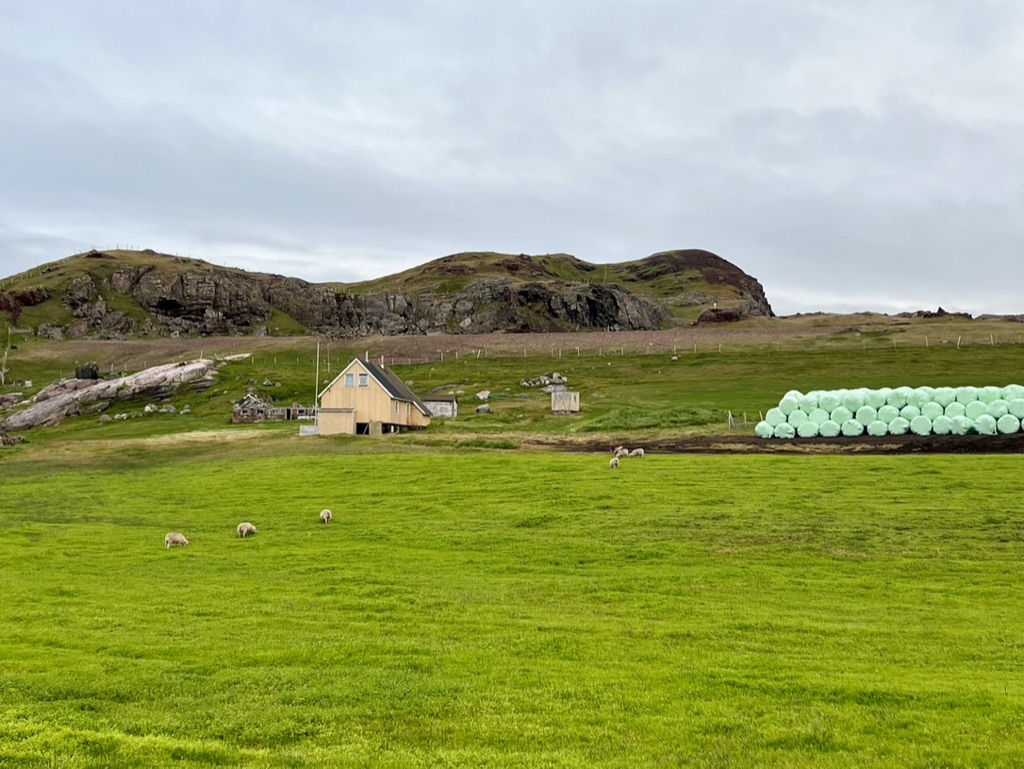
What is growing now and experimenting with growing more cold weather trees and such is a way to adapt to the warming climate. This year it was wetter and the grass was prolific. However, one of the zodiac boat pilots told me that last year they had a dry year and that it was a struggle to provide enough winter feed for the animals. This is possibly another complication of our changing climate – unpredictability.
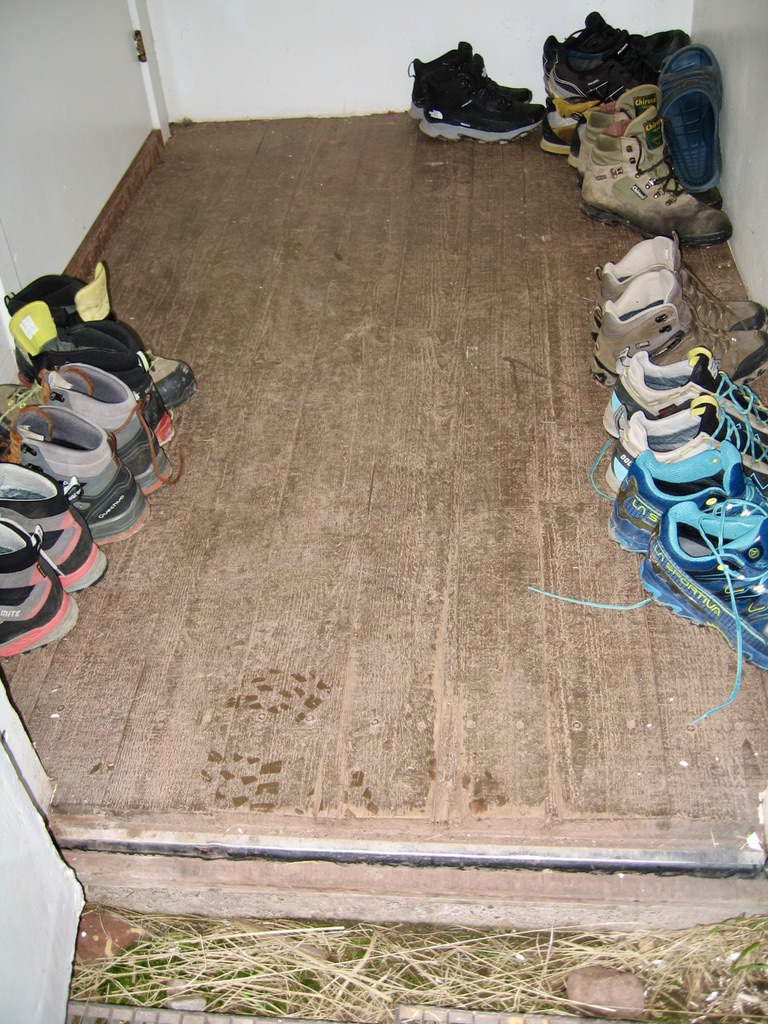
A short walk from the pier led us to the hostel. It was an unassuming building and, in my opinion, actually kind of shabby. Everyone was required to remove their shoes upon entering and then place them in some shoe cubbies. Hooks on the wall were where we hung our expedition coats. Slippers or some form of “indoor” footwear (our own) were worn inside. We were directed to our assigned rooms and after we met in the dining room about 25’x25’ which had 3 long tables. As we found out later, 2 other groups of the same numbers (12) were also staying at the hostel and shared the dining room. It was a bit tight when everyone was there.
Before we did anything else, Kunuk told us, first a picnic. Picnic?
That was what they refer to as basically lunch or snack time. This was so each day.
“Picnic” consisted of things like trail mix, crackers with cheeses and meat like salami, a candy bar, various spreads for the crackers, tea. Trail mix was in a large plastic bag, into which everyone’s hands reached, salami and cheeses were sliced at the table and grabbed by everyone’s hands, crackers in packages handled by everyone…do you get the picture? And nary a place to wash hands or have use of hand sanitizer. Not a very sanitary way to serve a meal, in my opinion, and it did irk me. Past camping trips have provided much better sanitation. I cringed every day about this. To my knowledge no-one fell ill.
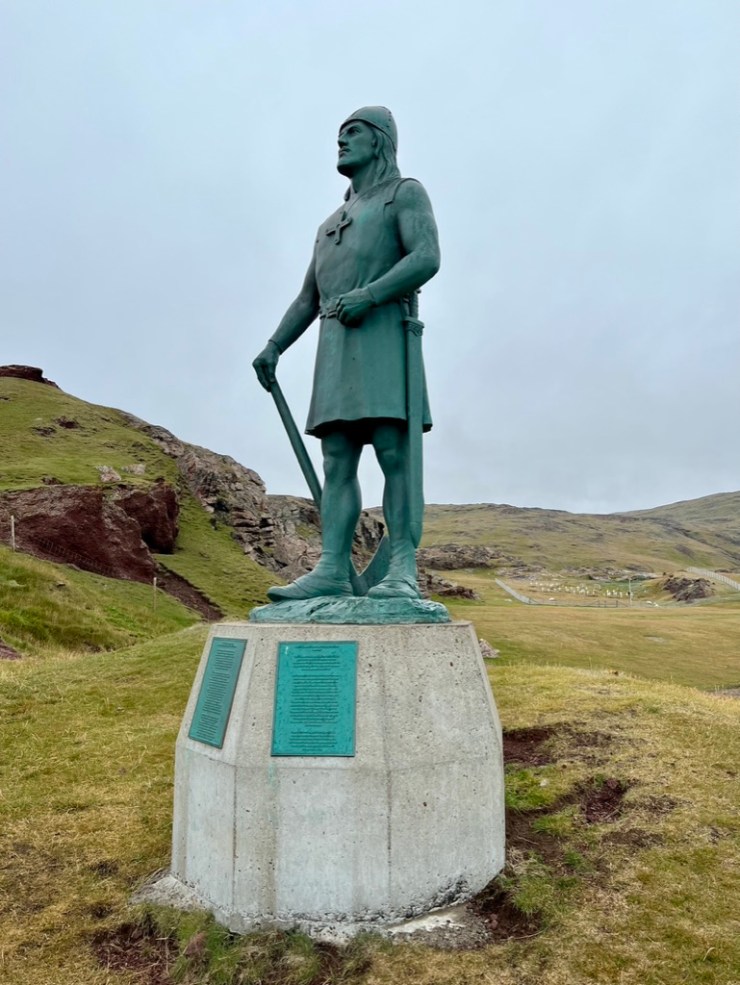
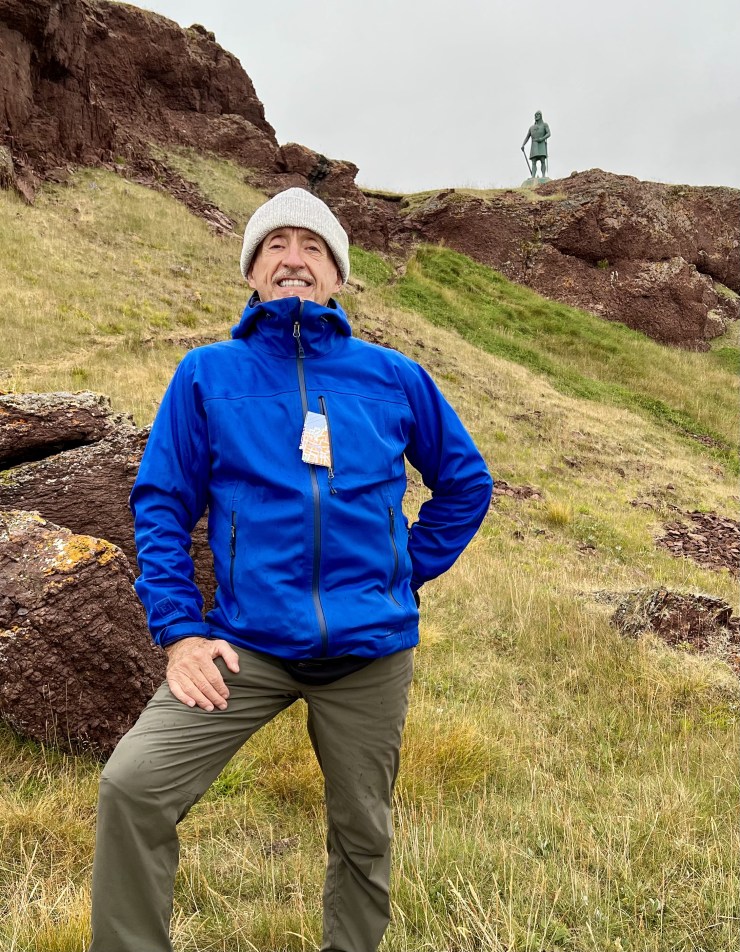
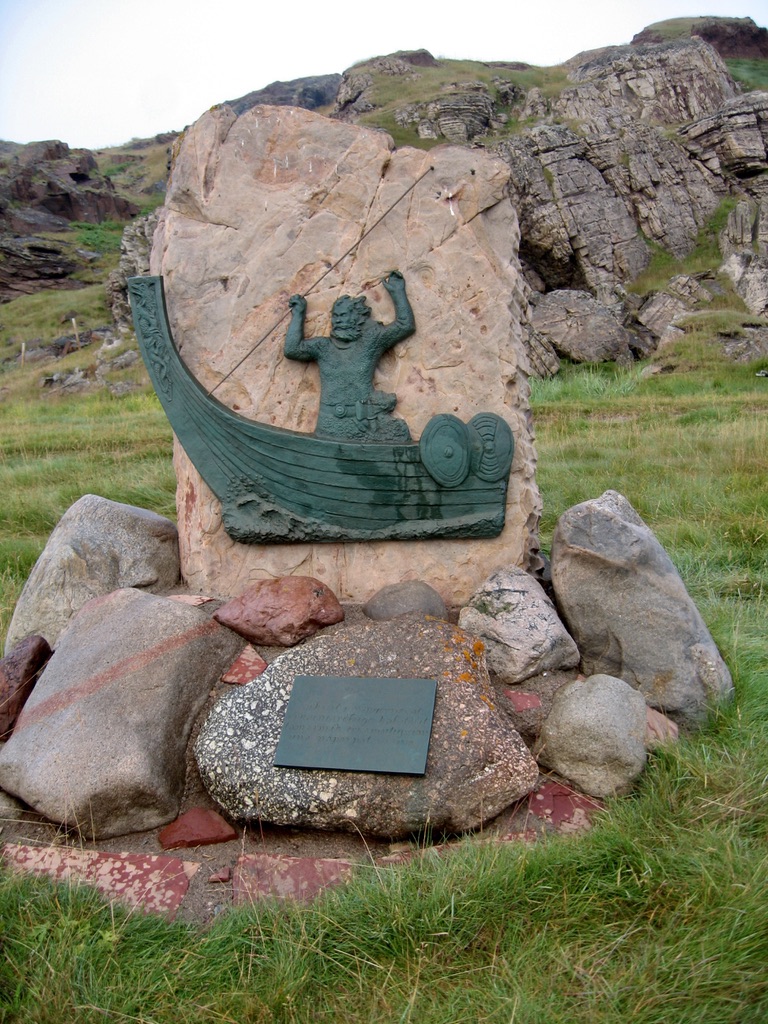
Be that as it may, after eating we wandered outside, hiking up a hill behind the hostel to a large statue of Leif Eriksson, son of Erik the Red who discovered and first settled in Greenland. This place where we were is that first settlement where the Norsemen lived in the late 900’s AD. Bear with me here as I want to share some history I learned in hopes it offers some perspective and further your own knowledge of Greenland.
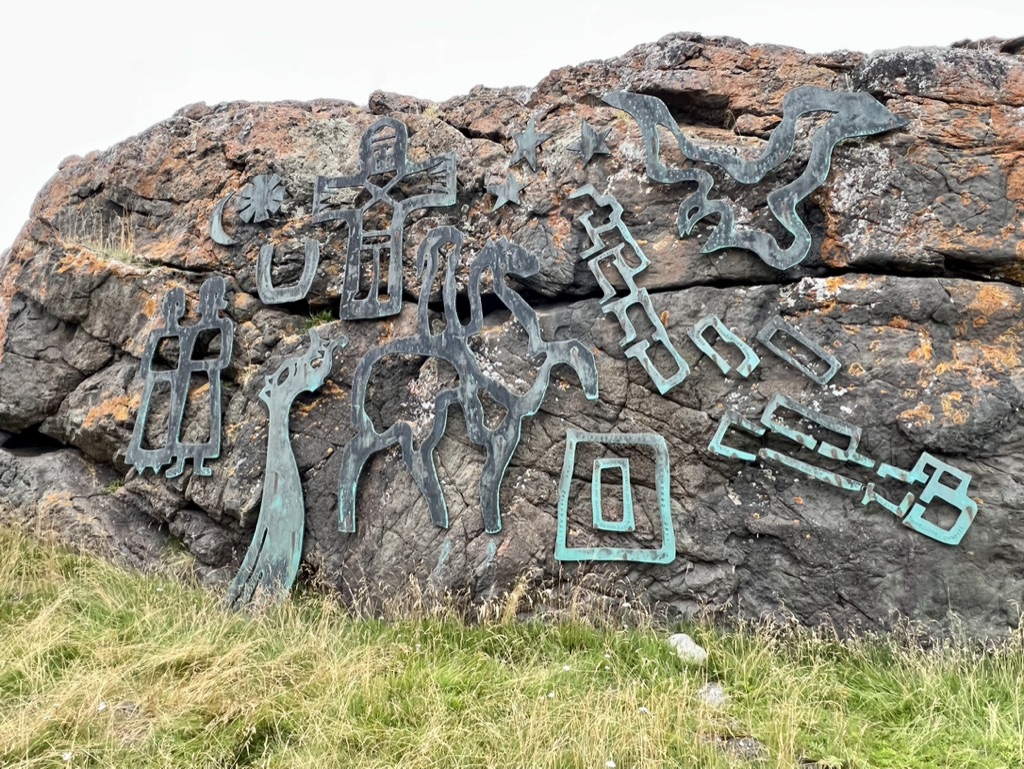
Erik the Red, upon first siting this new land, saw the green shores and valleys (just as I did when arriving). He called it “the green land” and so promoted it to his fellow countrymen to entice them to settle there. His son Leif Eriksson, born in Greenland, made amazing discoveries the most significant being the first European to reach North America (northern Canada) in the year 1000, 500 years before Columbus. The statue commemorates his discoveries in 1000 AD and is very impressive. Standing tall, Leif looks out over the land and fjord. Below was a farm, a gate across a gravel drive, horses grazing and a small cemetery crowded with white crosses. Quite a lovely site.
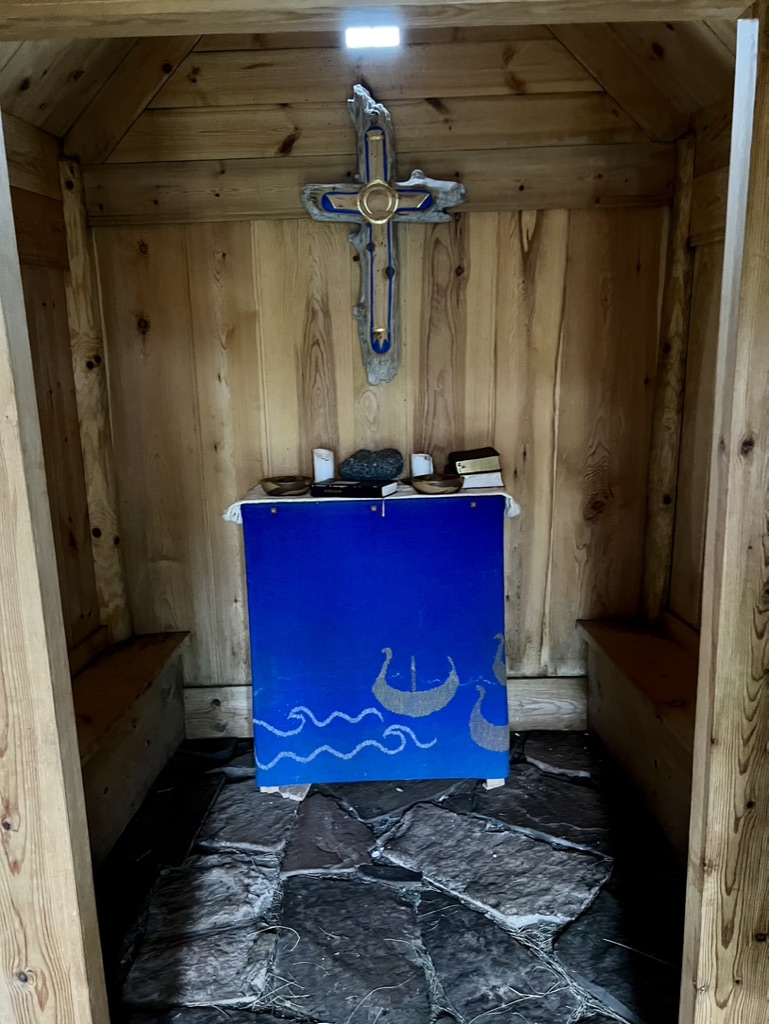
Continuing on down the hill we visited the reconstructed Brattahlid church, the first church built in North America. Then known as Tjodhilde’s Church, Tjodhilde was Eric the Reds wife. Their son Leif is credited with bringing Christianity to Greenland.
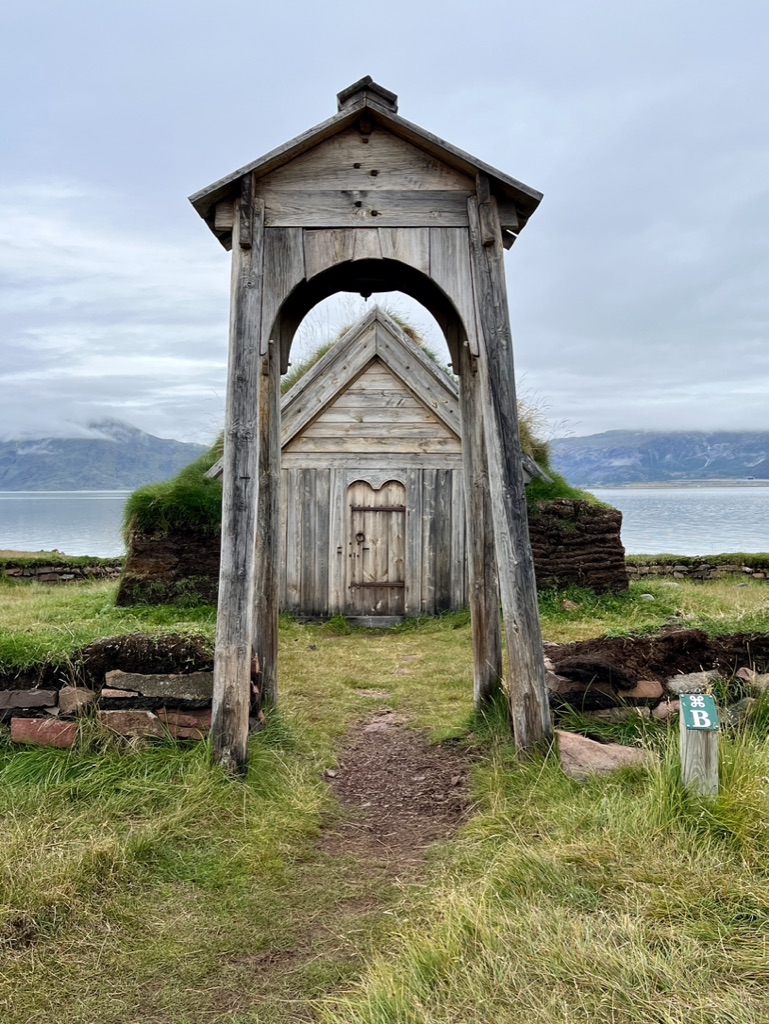
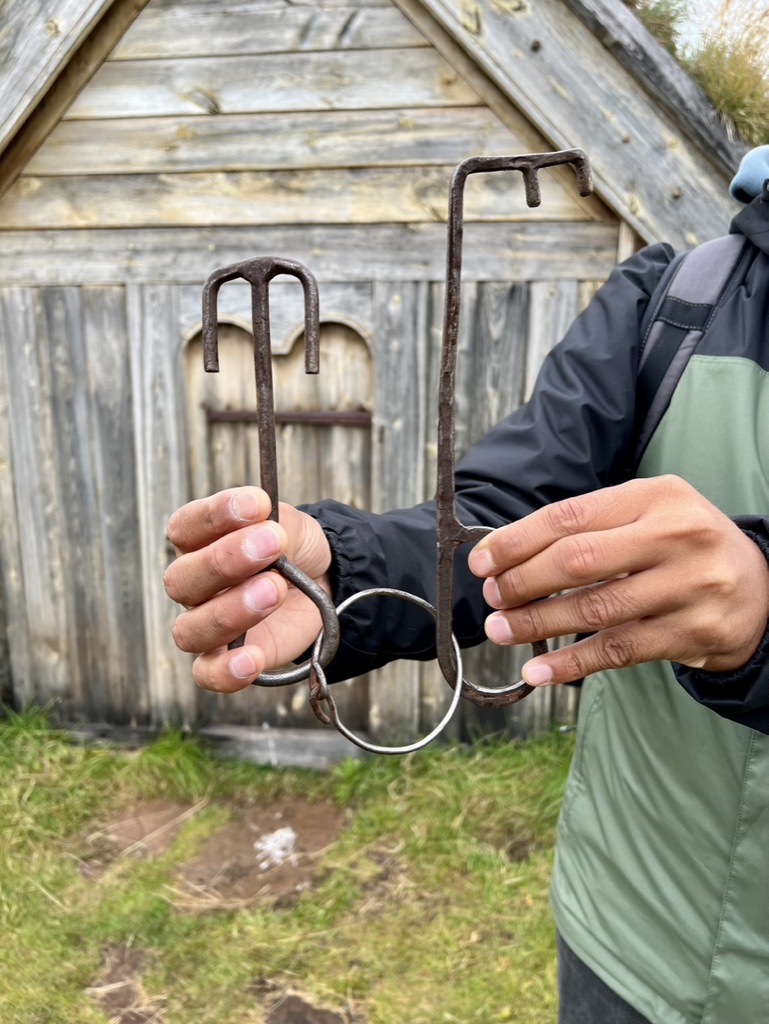
To open the church door required a large wrought iron key unlike any I’ve ever known. The key, like a part of a puzzle, had to be inserted into the lock in just the right way to unlock. Kunuk had several of us try to open it and Vicky, one of those from Spain, was successful. It is a tiny church, 6.5 x 11.5 ft., and despite its diminutive size can accommodate 20-25 people – butt cheek to butt cheek!
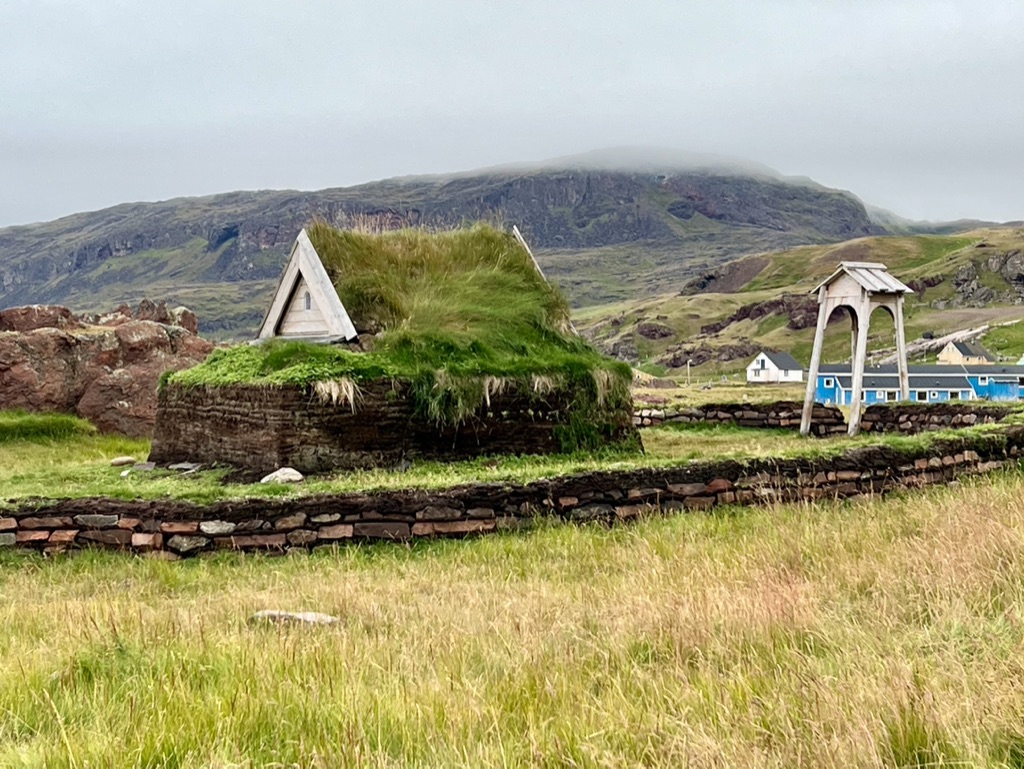
Near the church is the reconstructed long house of Erik the Red. This door lock also required another version of the unusual key. None of us, including our guide Kunuk could open it. The church and long house are both built in the turf and timber construction style as they would have had in those early years.
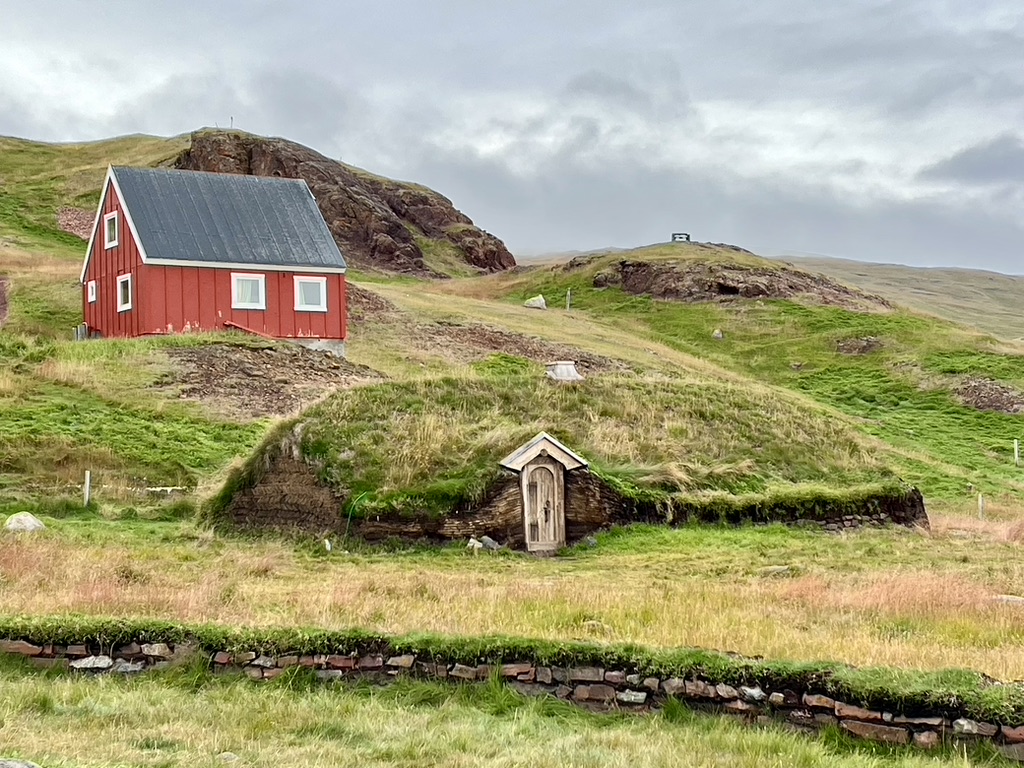
Around the area, Kunuk led us to other buildings and sites yet to be excavated including one recreated house wherein 2 or more families would have lived – a very “intimate” home – it was entered, crouching, into basically a low, tunnel, starting out low and then higher before entering into the living space. This allowed the cold air to remain out and warm air in. With the turf, timber and stone construction and unique entry, these dwellings remained well insulated and quite cozy.
Later frame homes were built for the sheep farmers on Greenland but they disliked them as they were drafty and colder holding much less insulation value. The wood frame homes are, though, where inhabitants now live.
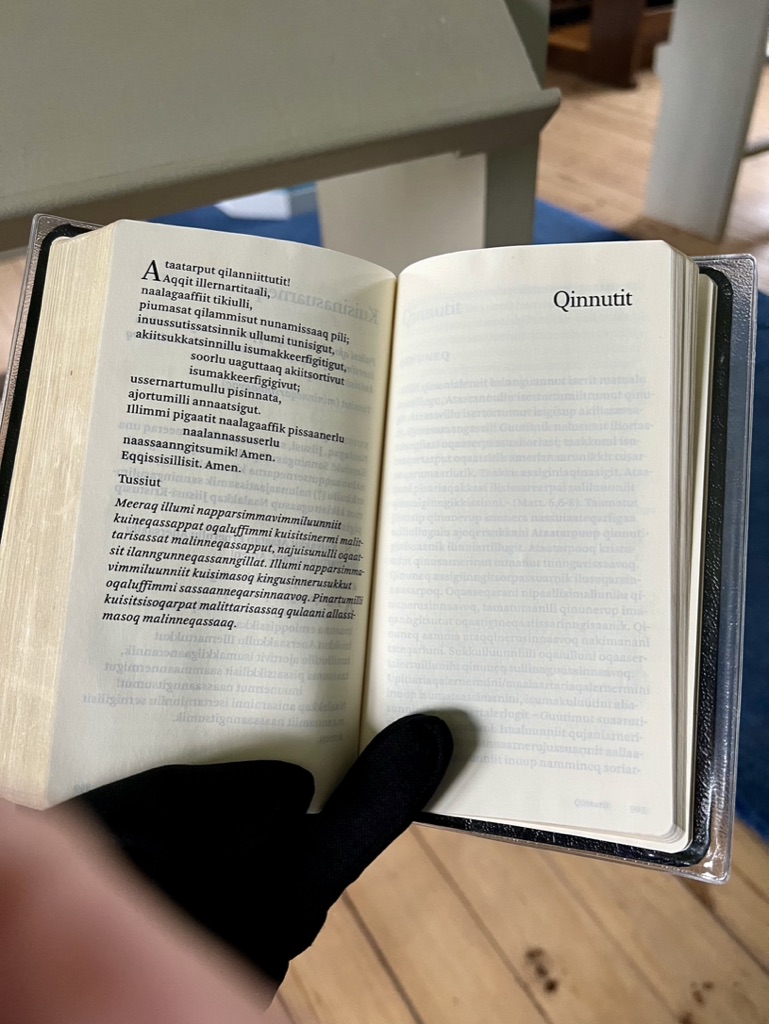
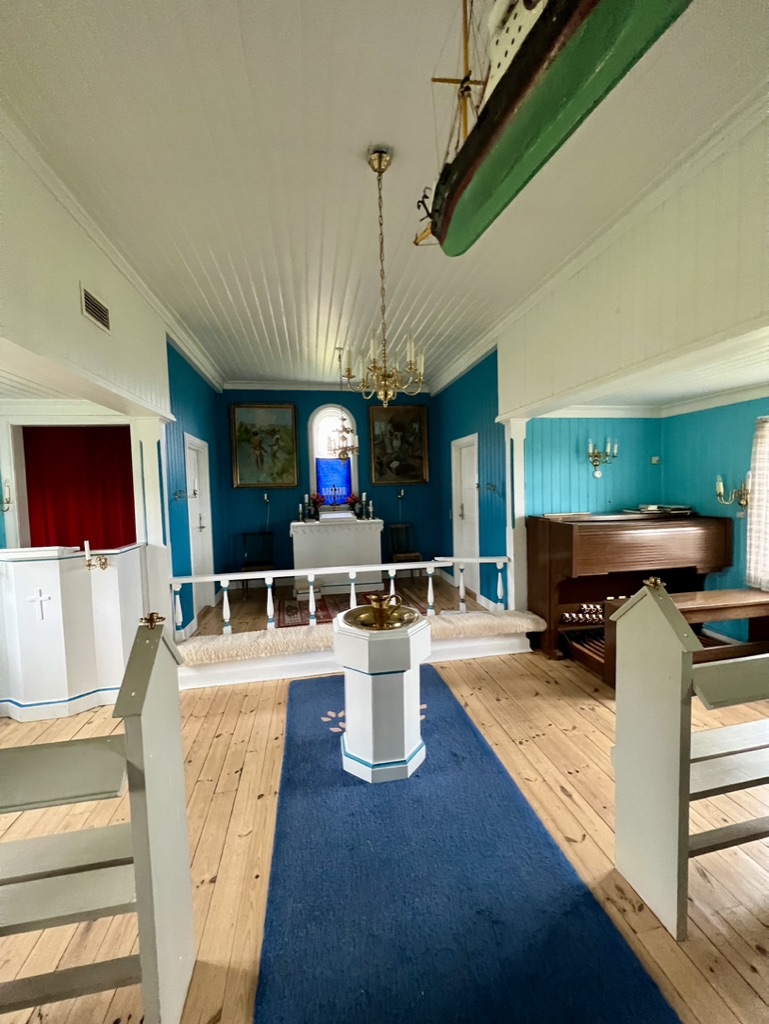
Kunuk also invited us into the current church and read (in Greenlandic) from their prayer book. Small and pretty, we asked about a model ship hanging from the ceiling and learned it is a tribute to the locals’ fishing way of life.
I learned many interesting facets of this early settlement of the original Norse people in Greenland.
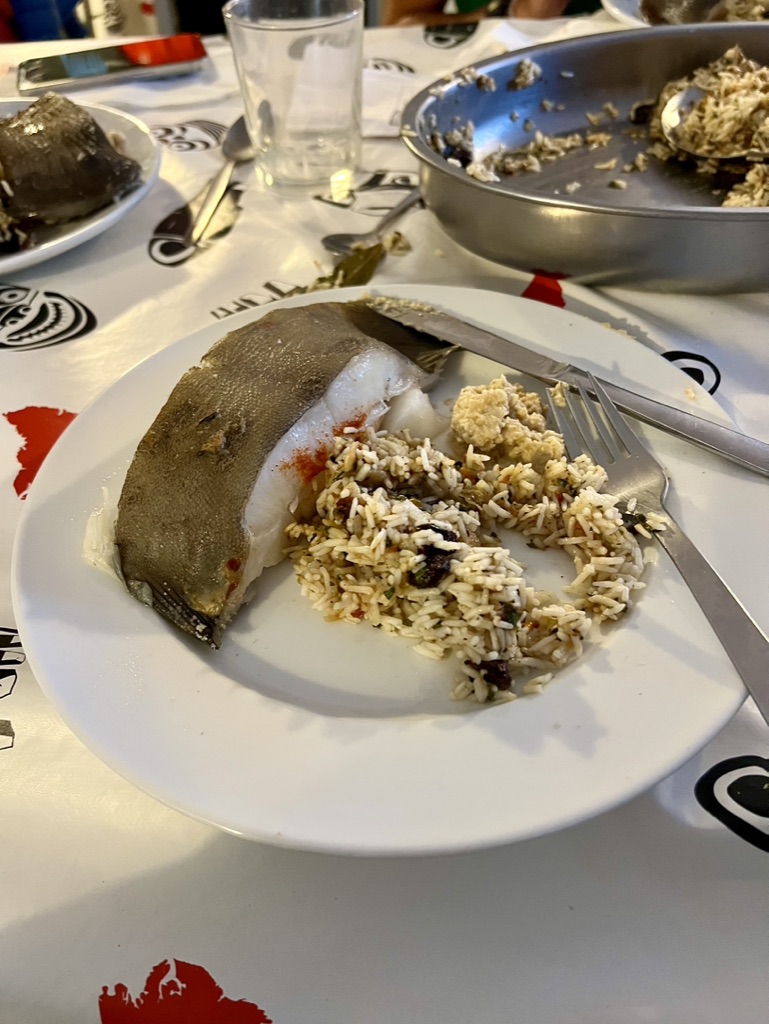
The 3 groups staying at the hostel were served dinner family style. In the cramped dining room, our meal consisted of hummus and crackers, bread, halibut, rice pilaf and vanilla pudding. Here our group got to know each other better, everyone being in very good spirits. Following dinner we were instructed on the next days itinerary when we would depart by 8:45 to the dock, board the zodiac boat and travel to the next town, Narsaq. That night I packed all that I would need for the next 4 days including extra layers of clothing, water bottles, small camera, iPhone battery pack, binoculars, hiking poles and waterproof duffle.
Adventure awaited.
 Waves In The Desert
Quite interesting. The homes were rather like modern day dome homes I suspect. As always thanks for sharing your adventures. BIG Sister-Janice
LikeLike