#15, Rome: The Colosseum, Palatine Hill and Roman Forum.
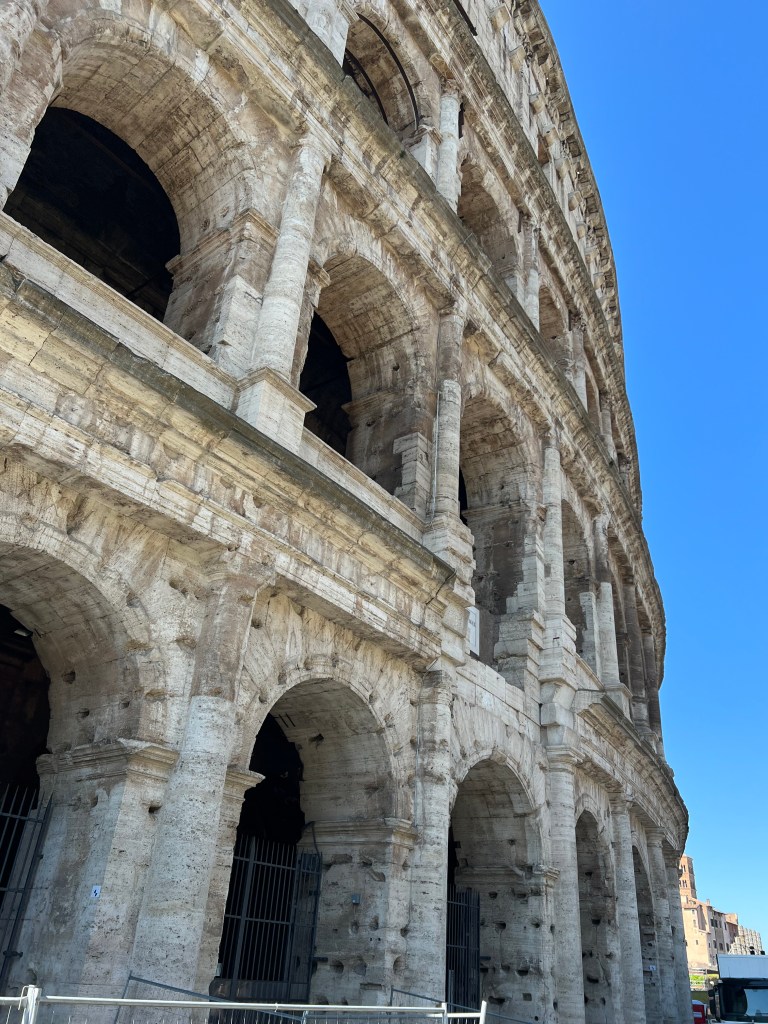
April 6, 2023 – Our last day in Italy, in Rome, was possibly the best day of the entire trip.
This day we would be visiting one of the most iconic places in Rome – The Colosseum. Also included in our prearranged tour that day were Palatine Hill and the ruins of the Roman Forum.
Oh my gosh, what we were about to see and explore was extraordinary.
Although we all have seen photos of the Colosseum and of ancient Roman ruins, being there and seeing it all first hand was nearly inconceivable. What the ancient Romans built and created is truly a marvel.
Pompei was remarkable in its own right, as we witnessed the ingenuity and skill the Romans at that time created with such a beautiful functional city 2000 years ago.
Here too, in Rome itself, the architecture that stands as reminders of this past civilization leave a person in wide eyed wonder. I stood in awe at the complexity and beauty of what remains of this ancient civilization.

Mark and I, having a pleasant sunny day, walked from The One hotel to the meeting point of our tour. As we approached an open area with a plaza there stood a huge white marble building with a colonnaded portico, atop the building were winged gods in chariots drawn by horses, other statuary, and a high central pedestal topped by a dignified man on horseback. This was the monument to Victor Emmanuel ll, the first king of a unified Italy and shrine for the Italian Unknown Soldier. It is beautiful and striking in appearance as it stands alone dominating the area around the Piazza Venezia.
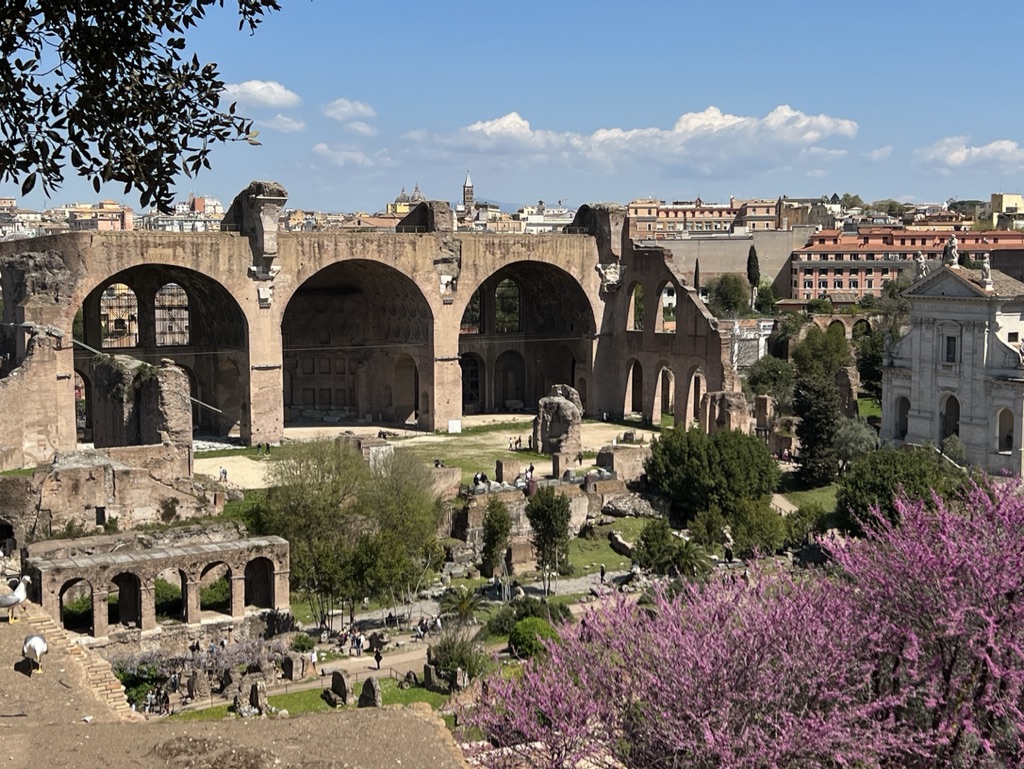
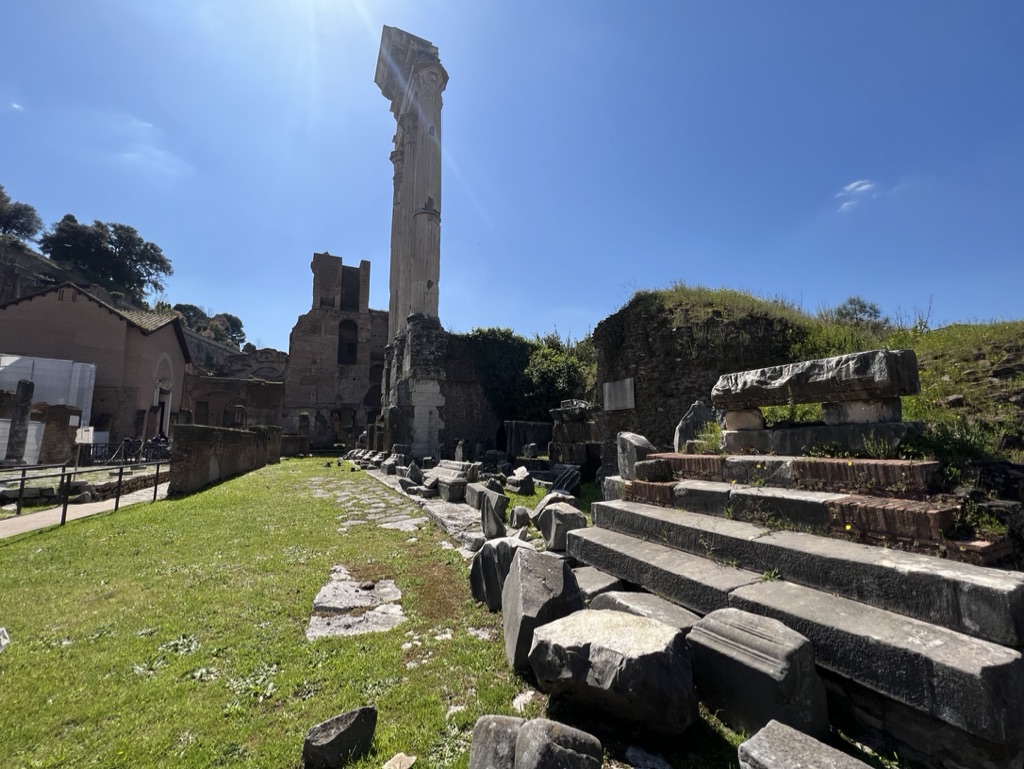
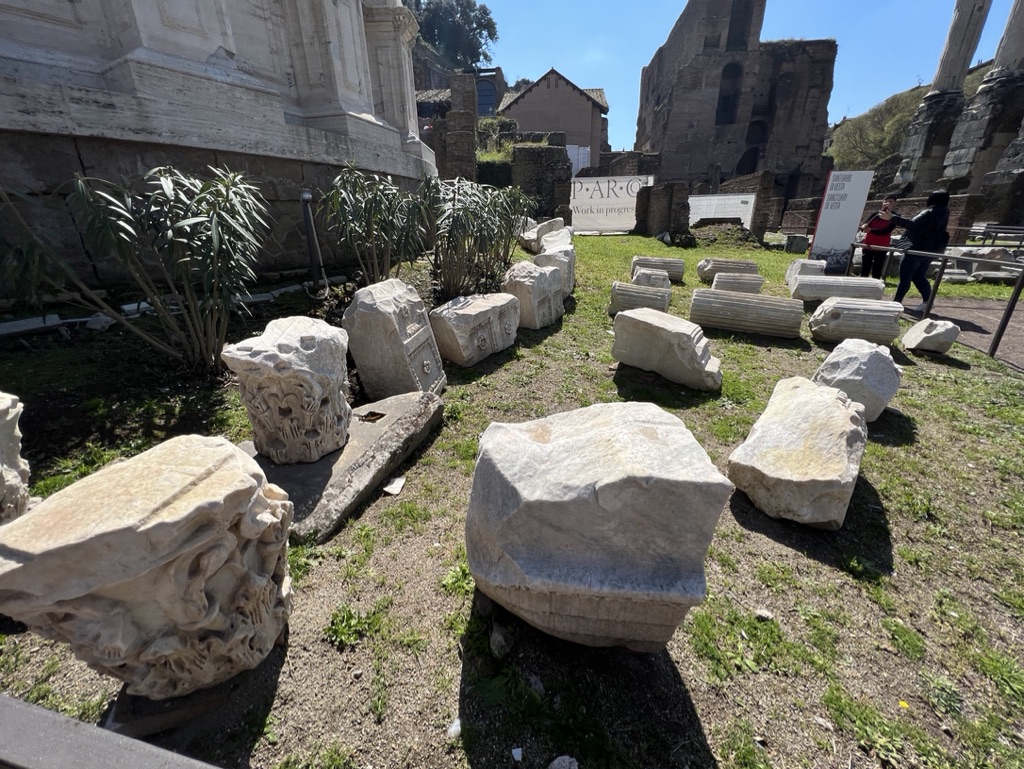
Even with its dominance at this terminus of roads radiating outward from the monument, my attention was soon drawn to one side where excavations revealed building remains including columns standing tall amidst the ruins, while other broken sections of columns and parts of buildings lay strewn about around the remains of crumbling walls, marble floors and steps leading up to long collapsed temples. These, the remnants of ancient Rome, are reminders of the splendors of that era: of Caesars, gladiators, chariots, gods, mythology, magnificent temples and villas.
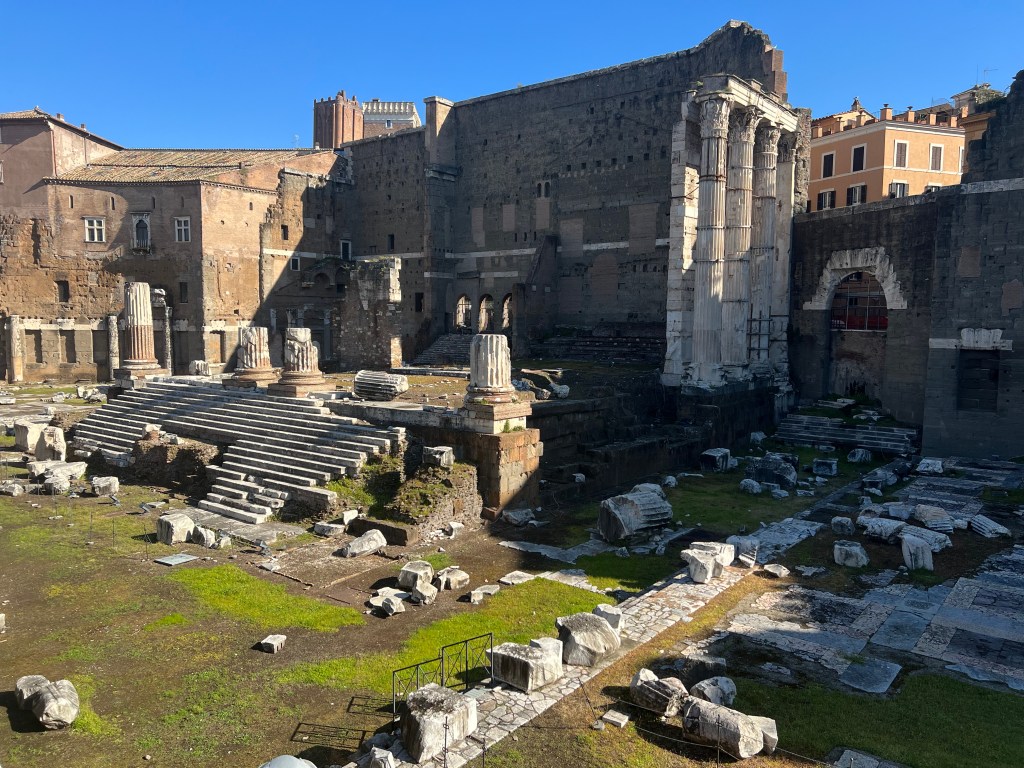
The entire area there is an archeologic excavation site of the Roman Forum. It captivated me. And mind you, this is in the current city with all of the “newer” buildings around it. The ancient site stood in contrast to that of this current era. While it was tempting to continue exploring here, we did have the tour of the Colosseum, Palatine Hill and Roman Forum reserved this day and it was important to arrive at the meeting point in time.
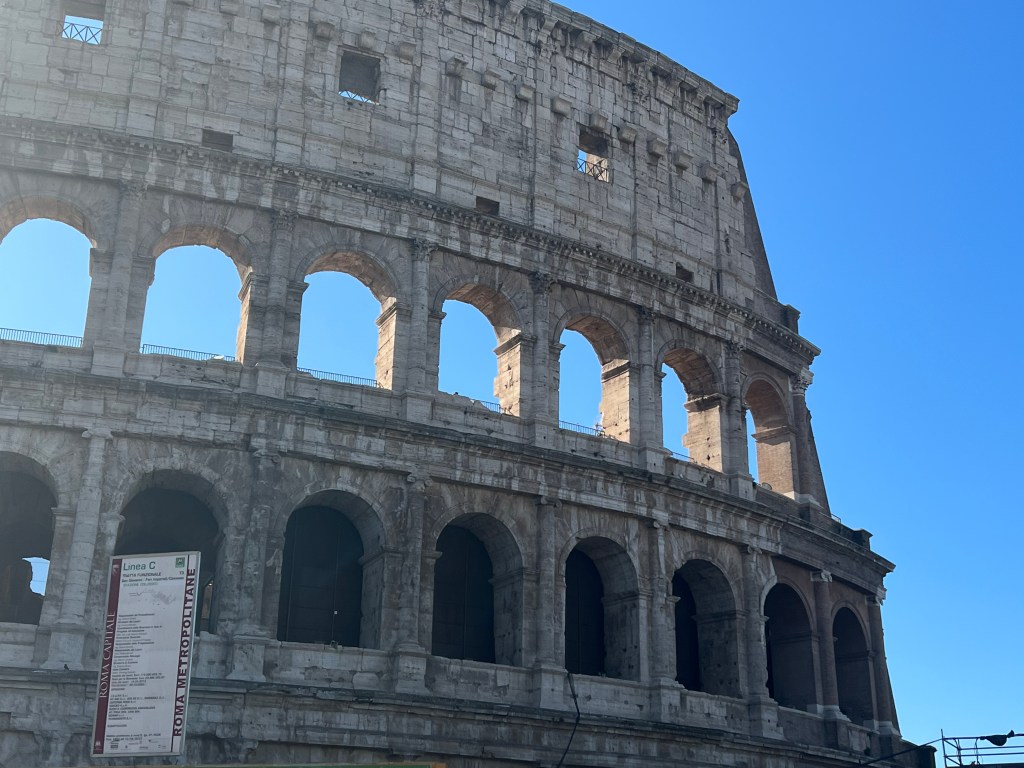
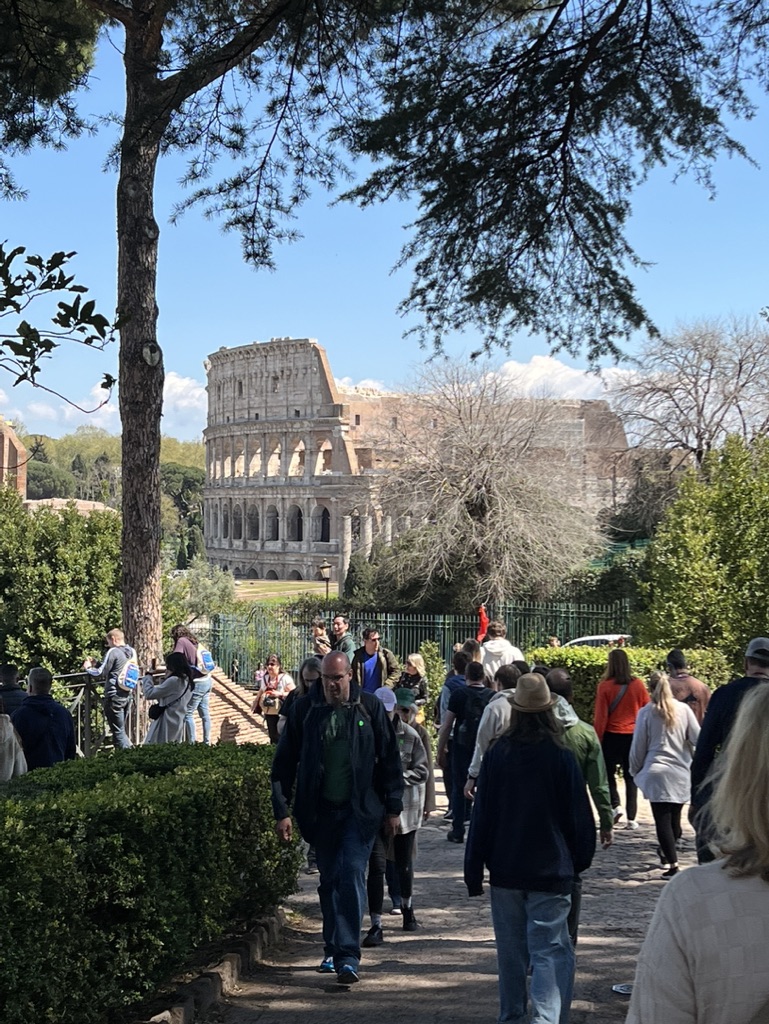
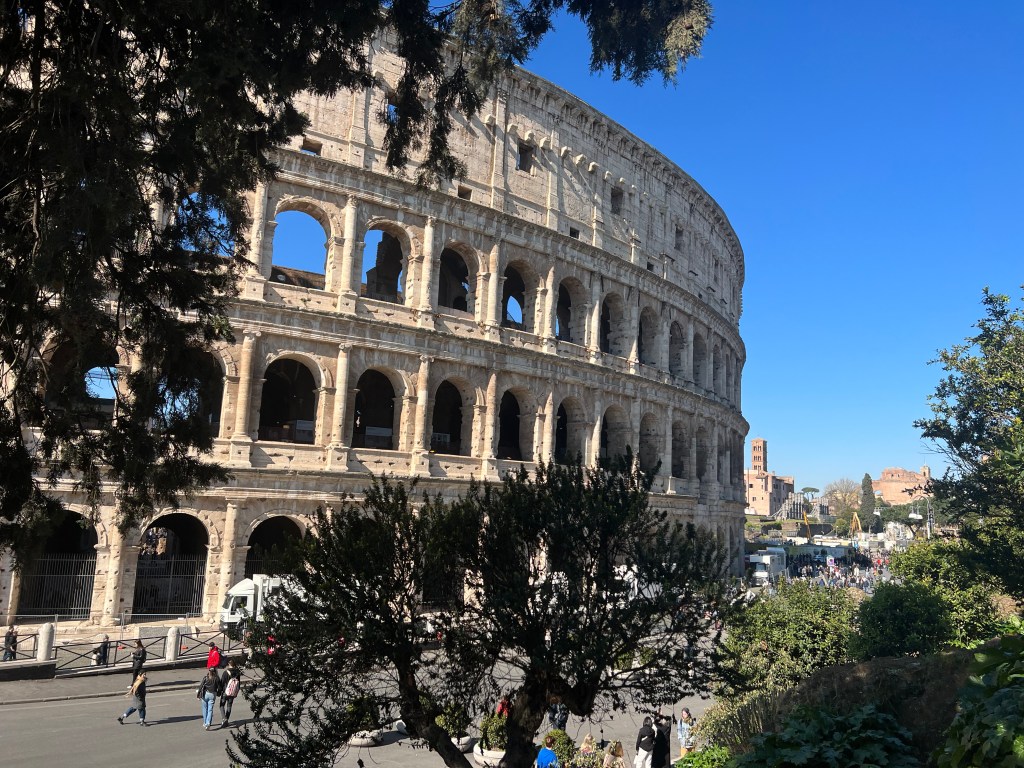
Not far, searching for the meeting point for our tours, we got our first sight of the Colosseum and it was incredibly impressive to see. Even with considerable road construction around it, its size and presence dominates the area.
After checking in and joining our tour group, our guide led us down to the Colosseum where sizable crowds awaited admittance. Our passes allowed us quick entry, but that did not mean we were the only group entering, as there were hundreds more already inside.
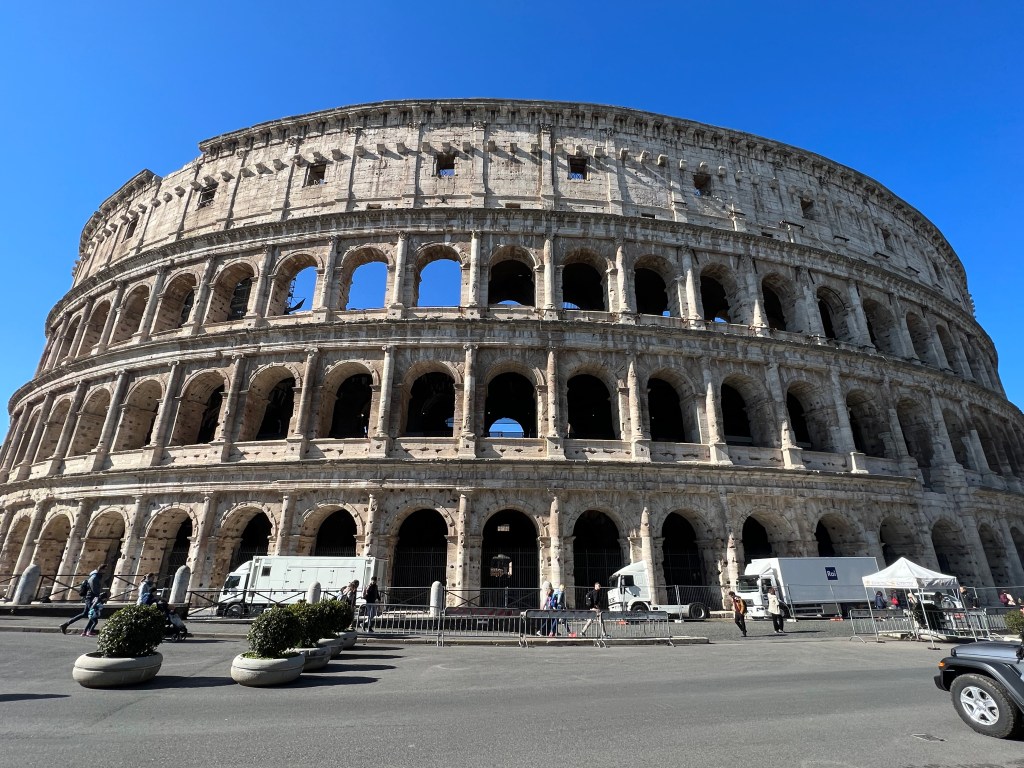
Standing in the shadow of this colossal structure, its size is impressively magnificent. And as we entered and toured inside, learning more about its construction and uses, the more phenomenal it became.
Emperor Vespasian began construction of this, the largest standing amphitheater in the world, in 72 AD and was completed in 80 AD. It is elliptical in shape, not round. The completed structure could accommodate 50,000 – 80,000 spectators. The Roman engineers behind the building of this project built it for easy access and equally quick exit, emptying it completely within minutes. Entry to seating was organized where patrons could easily locate their entry points to their seats. This surely is very similar to how our stadiums are managed with easy access to a person’s seating and multiple exits.
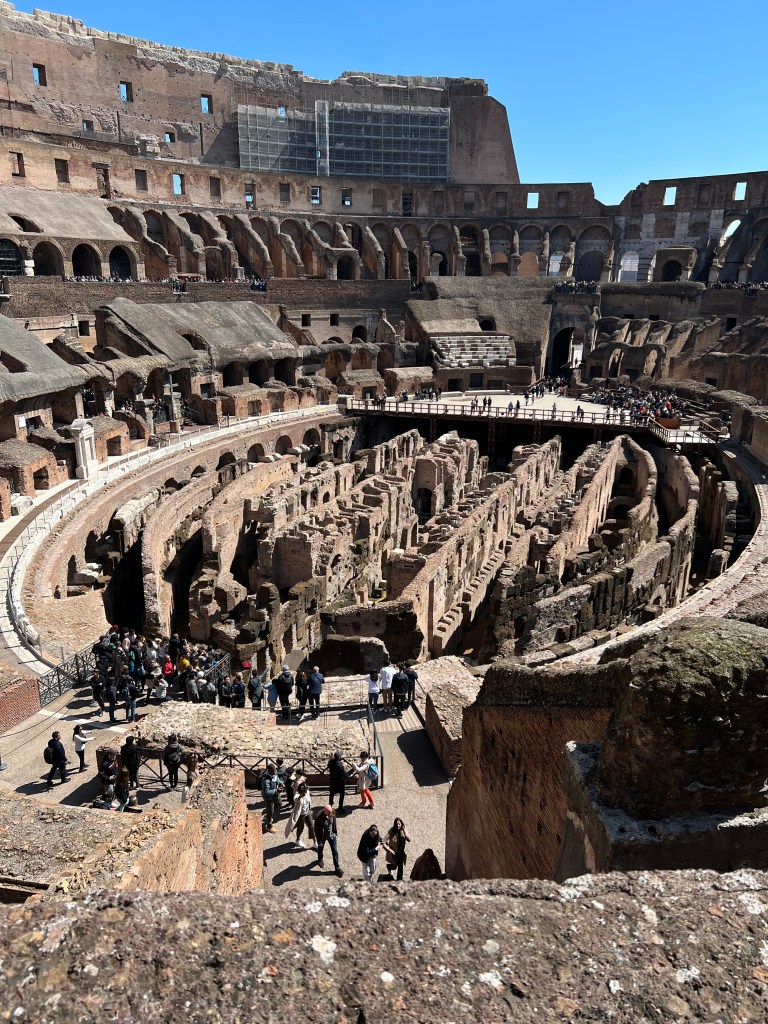
Within its walls gladiatorial contests were held, as well as animal hunts, executions, famous battle re-enactments, and mythologic dramas performed.
Over centuries modifications were made. An major earthquake caused part of the outer elliptical wall to collapse but was reinforced to provide stability.
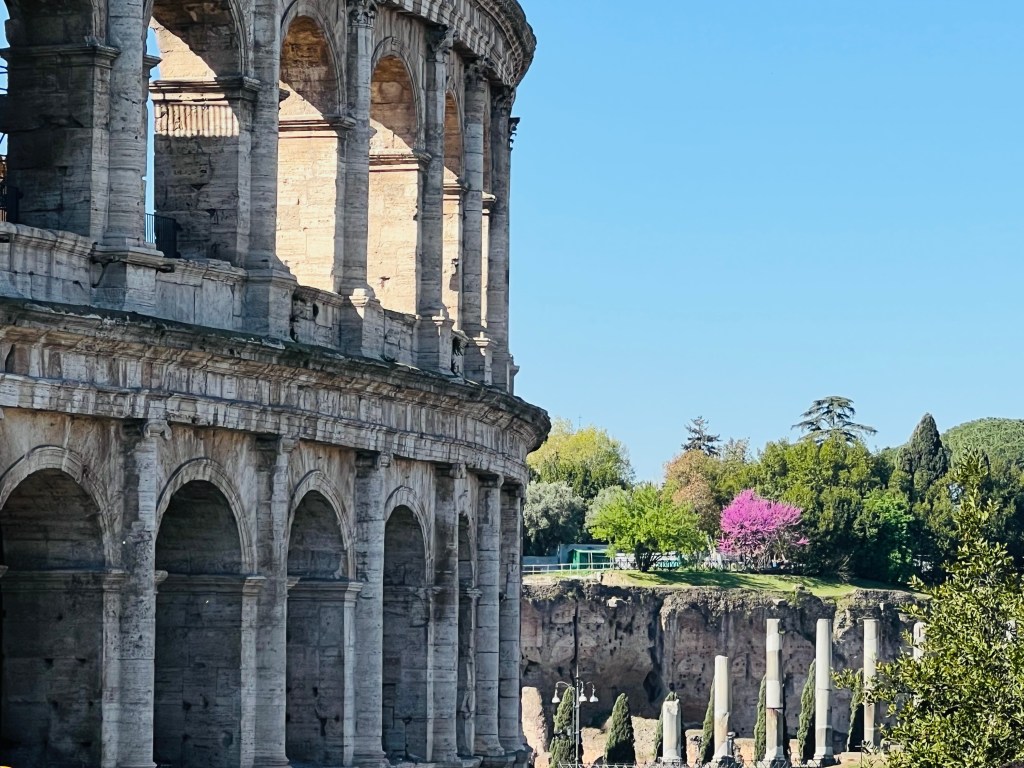
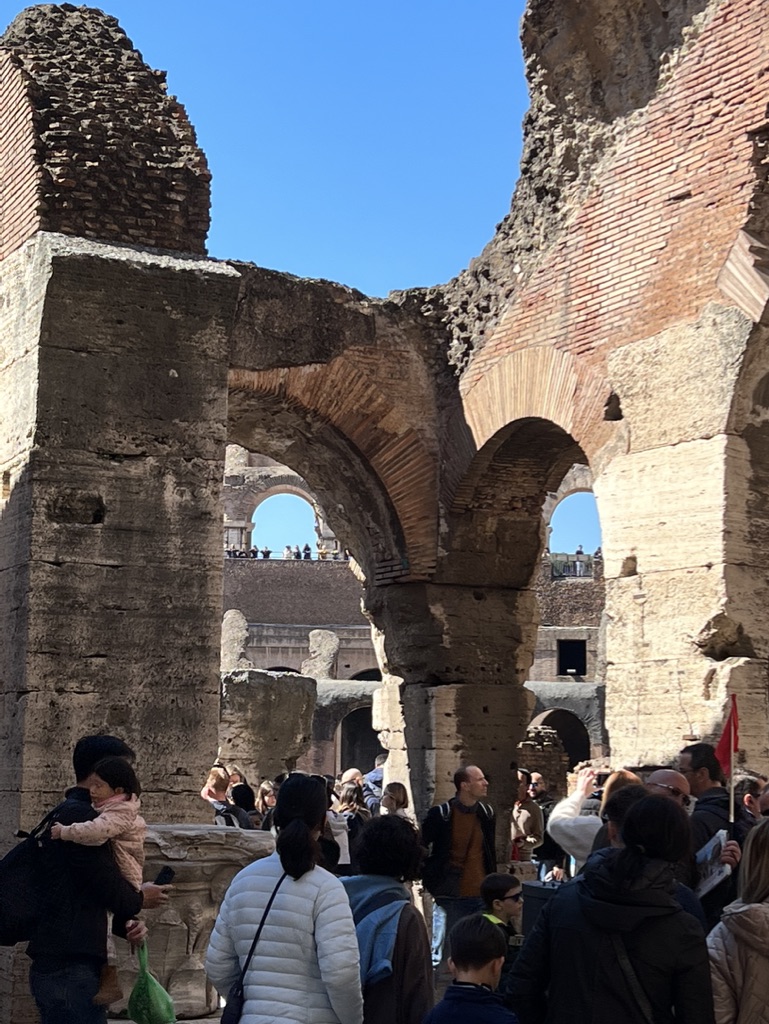
Once inside, looking up at the high vaulted ceilings, and out through the arched openings, I could almost imagine being there in ancient times to view a gladiator contest or other performance. As we ascended up the old stone stairways and then out onto the inner walkways, it was not difficult to image the seats filling with people. Of course there were crowds all around us but not seated. Looking out over the huge expanse inside the arena and all around and across, I felt quite small. The place is vast!
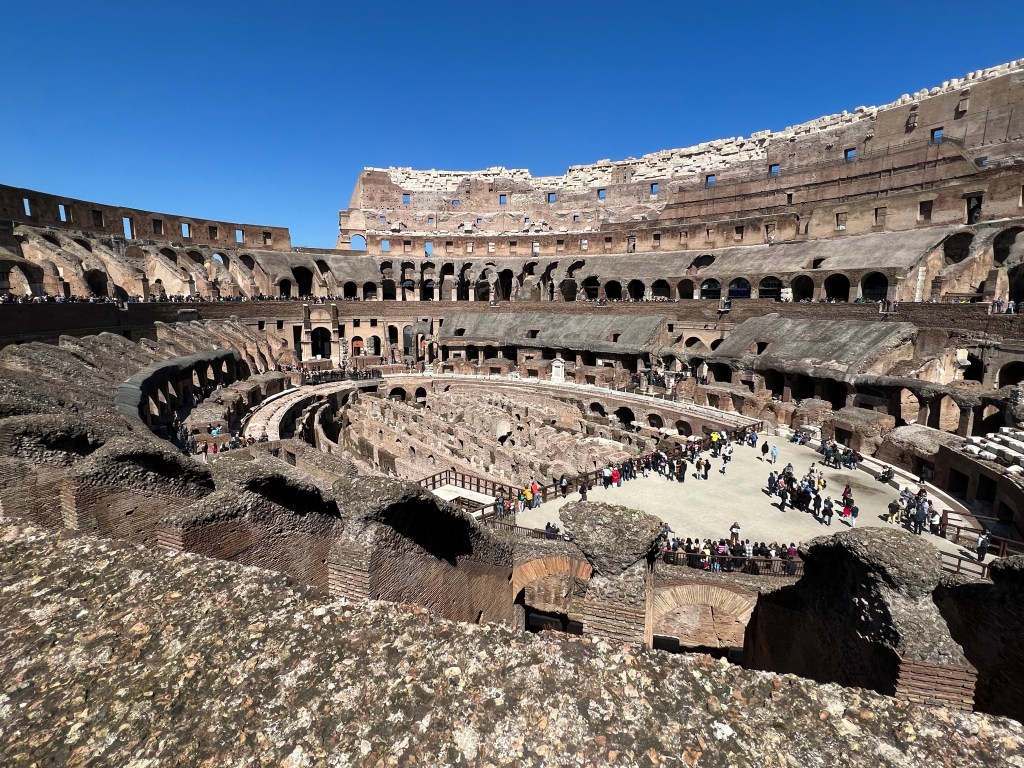
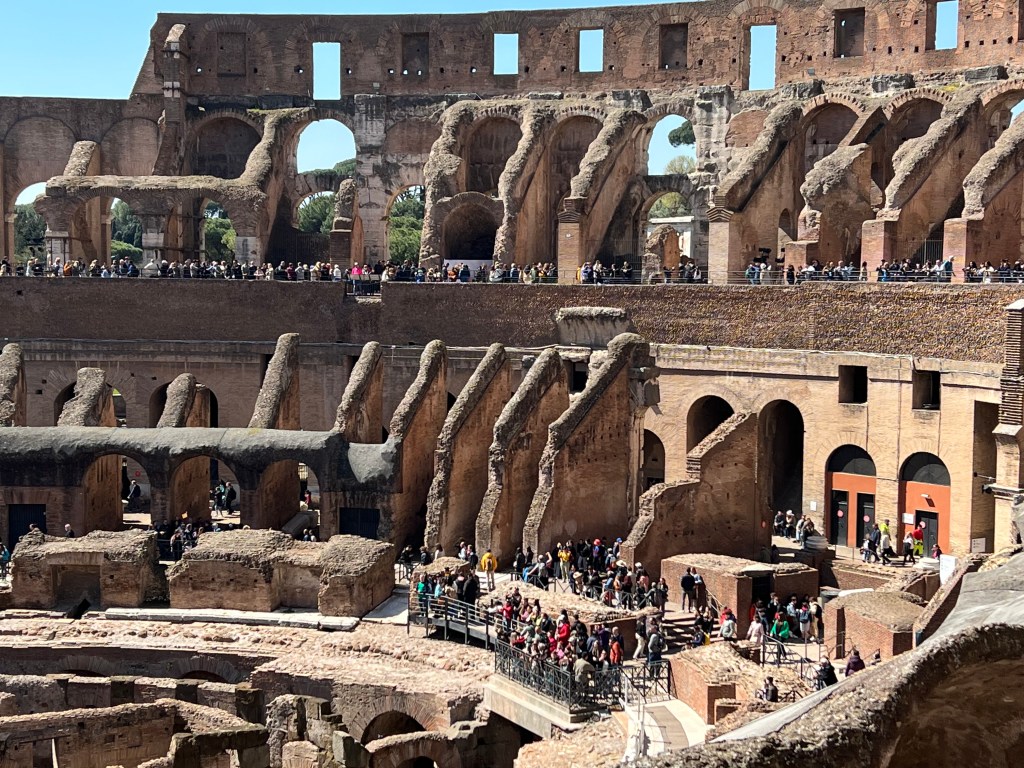
Crumbling walls and stairways are all around, but there was no feeling of danger. Further explanations from our guide helped learn of its construction and engineering. Replicas of the original building are on display allowing one to further imagine its grandeur during its greatest days. Standing in each of the many outer arched openings encircling the Colosseum there would have stood statues while overhead in the central portion, a retractable canvas sail covering could be drawn into place offering shade over the audience. The movable coverage did not cover the interior entirely, rather leaving an opening over the central stage area below. Likewise the coverings could be drawn back allowing full daylight to fill the arena. Those handling the moveable coverings were specially employed sailors, whose expertise with sail cloth was already established.
Click on photos for full size and slideshow:
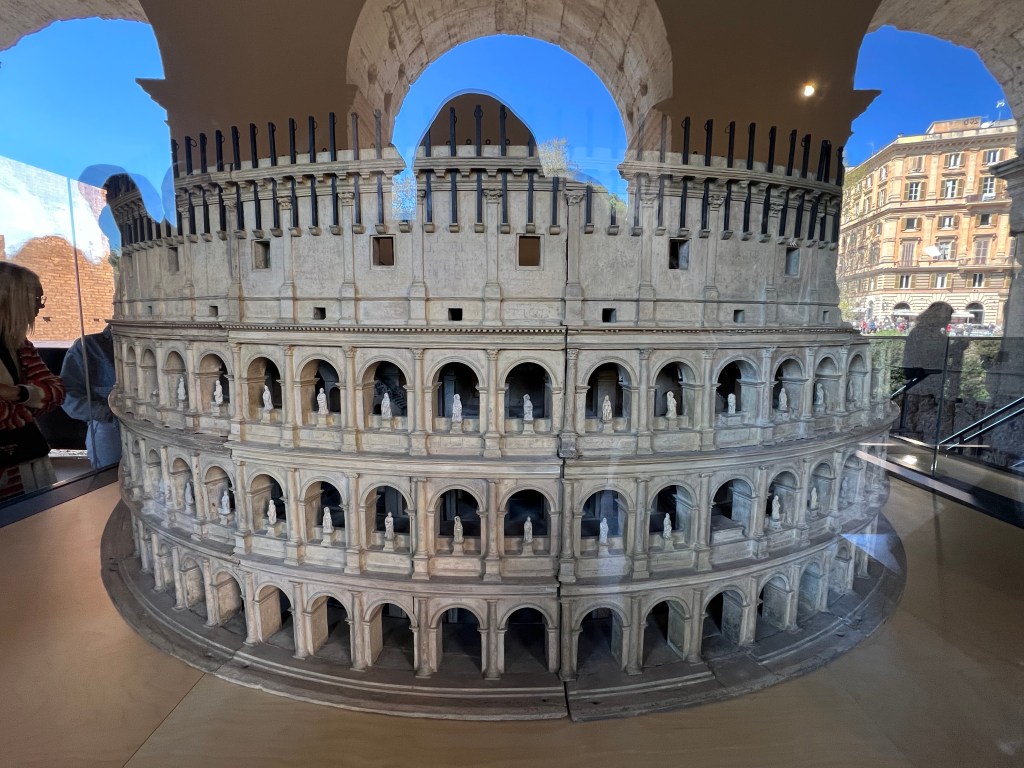

Apparently retractable roofs were thought of and included in the design of The Colosseum, so you see, retractable roofs are not a “new” idea for covering stadiums.
In the very bottom is where the gladiators resided as well cages for all of the wild animals used in the spectacles of them fighting each other to the death. Designed into this was a counterweight lift system that allowed the animals to be lifted up to the stage area above: the stage area being constructed of wood flooring covered in sand. It is inconceivable, now, to imagine sitting in a gigantic auditorium watching wild animals set upon each other just to watch them kill each other. Likewise, public executions with prisoners also having to face death by wild animals. To watch them mauled and torn to pieces would be gruesome! How would anyone find sport or pleasure in that?!
Click on photos for full size and slideshow:

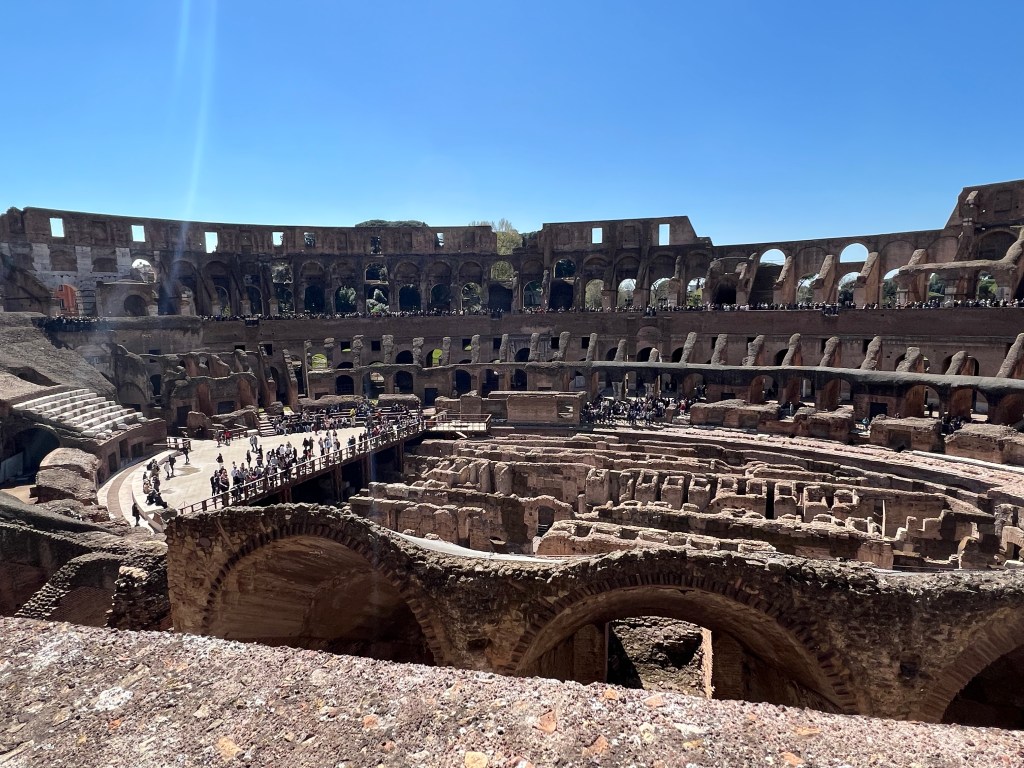
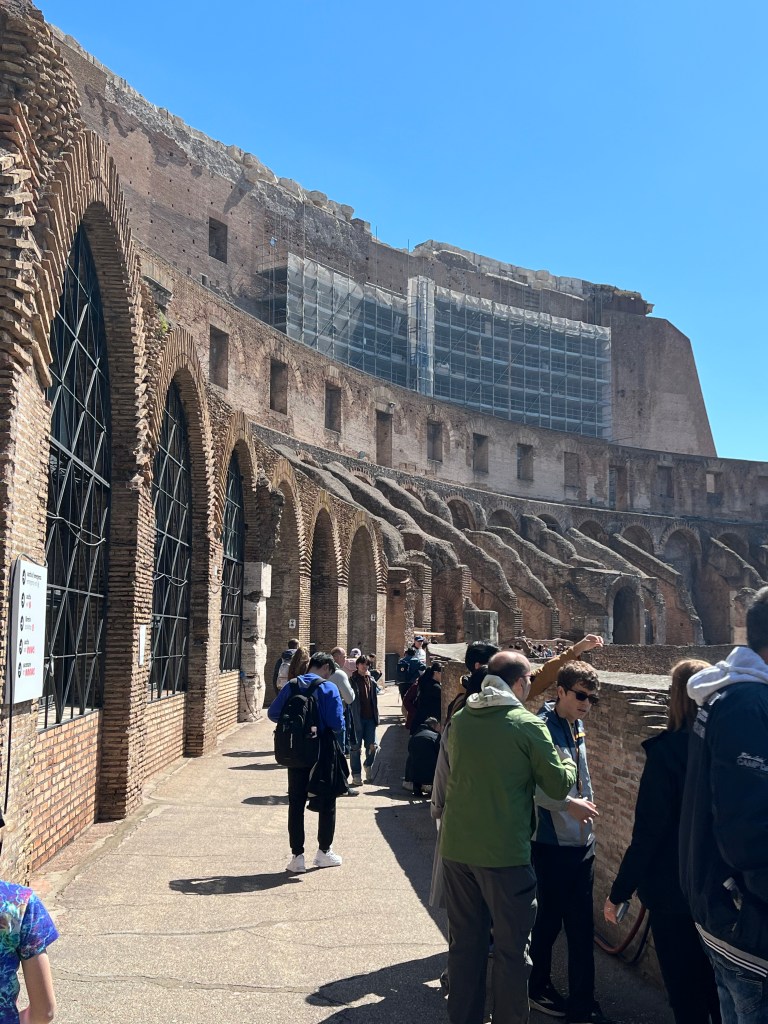
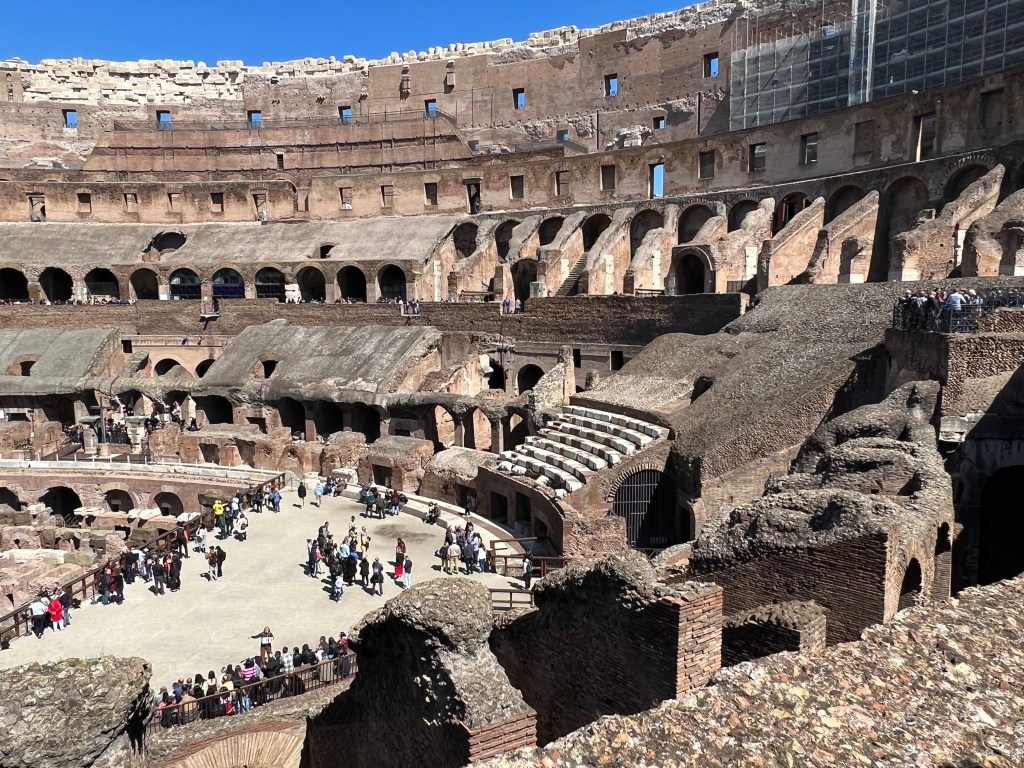
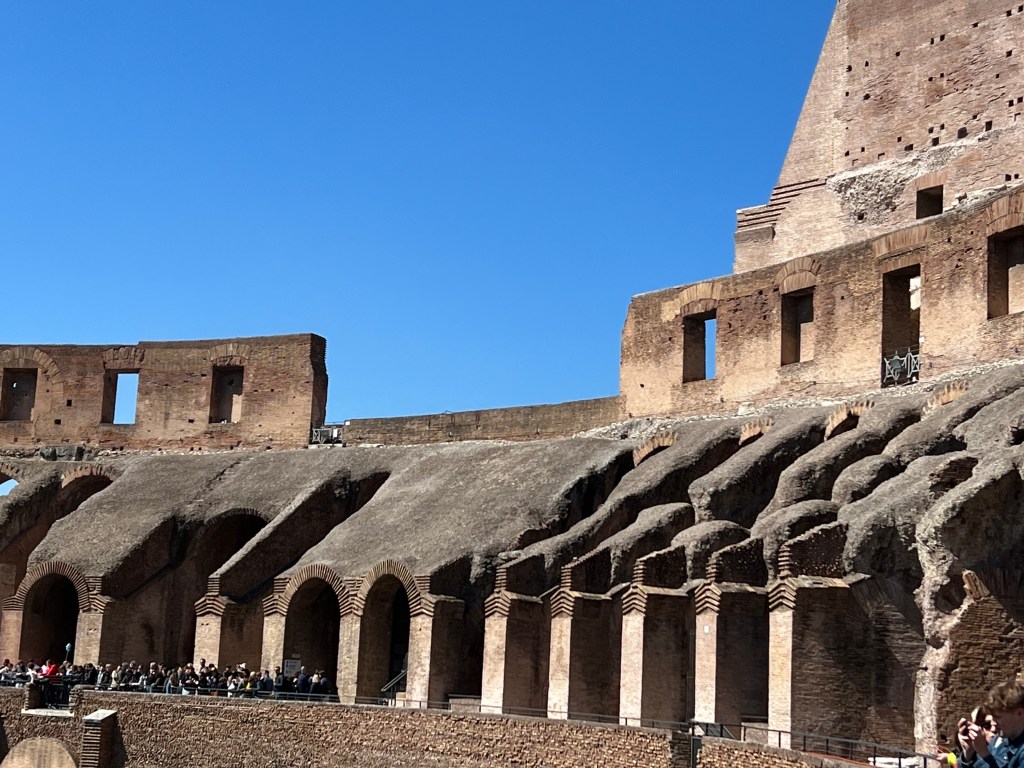
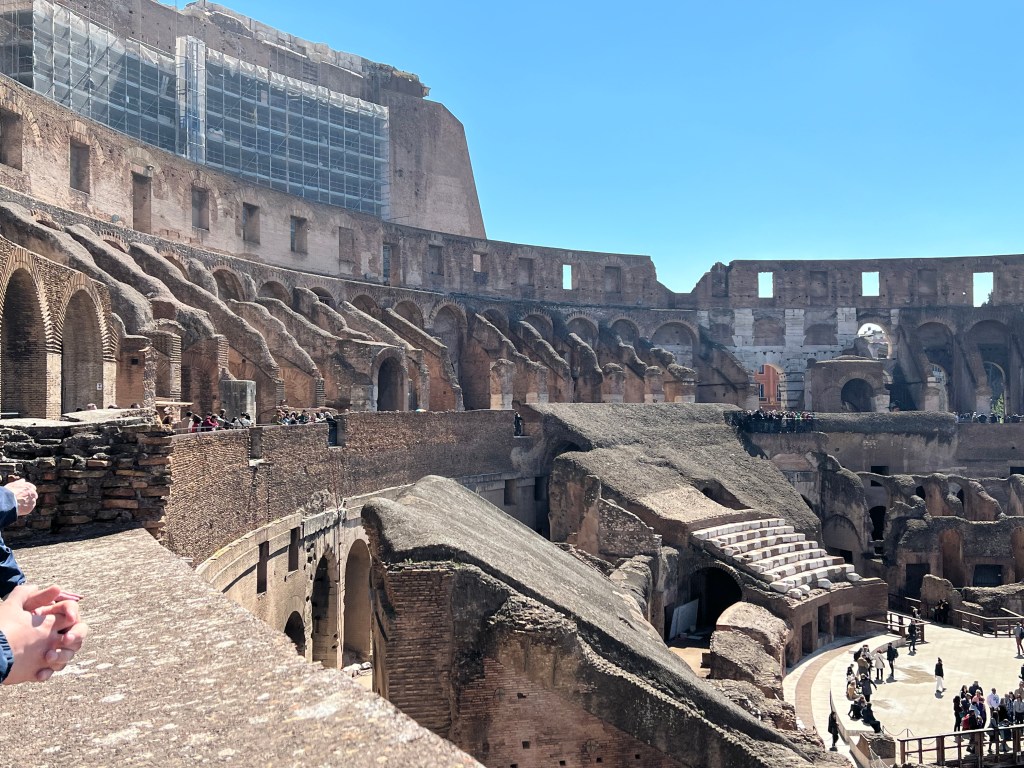
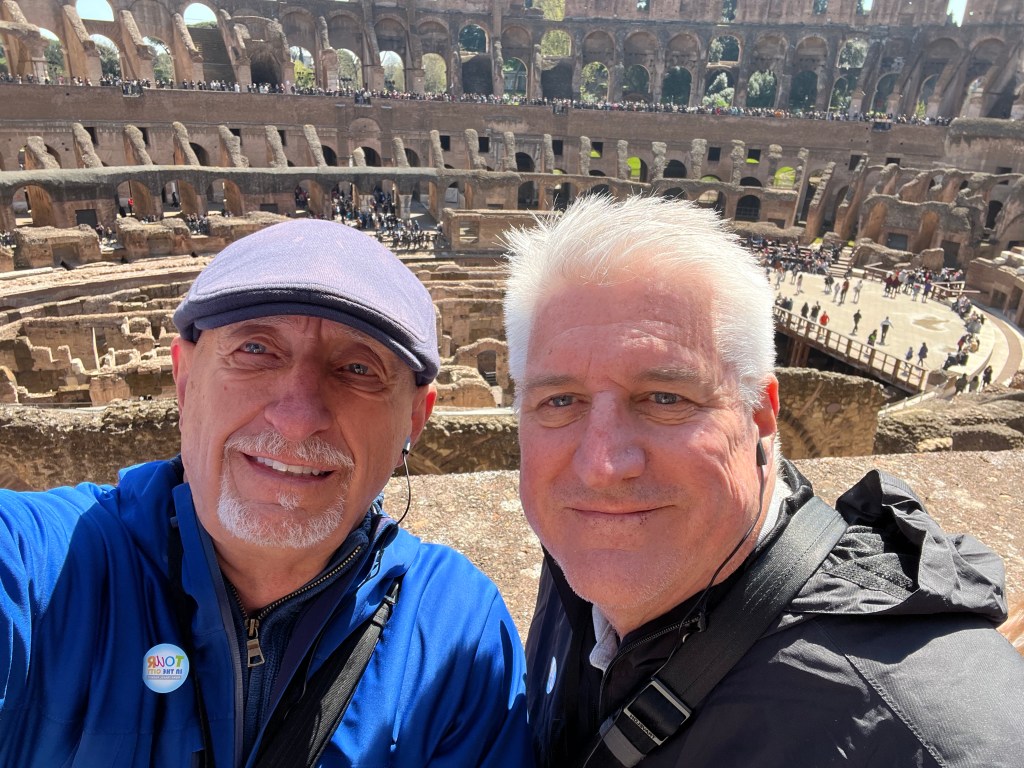
Despite the cruel and inhumane happenings from that period in history, The Colosseum stands as a marvel and still stirs excitement for its very endurance over hundreds of centuries.
Outside, again looking up at this gigantic building, I was remained awestruck.
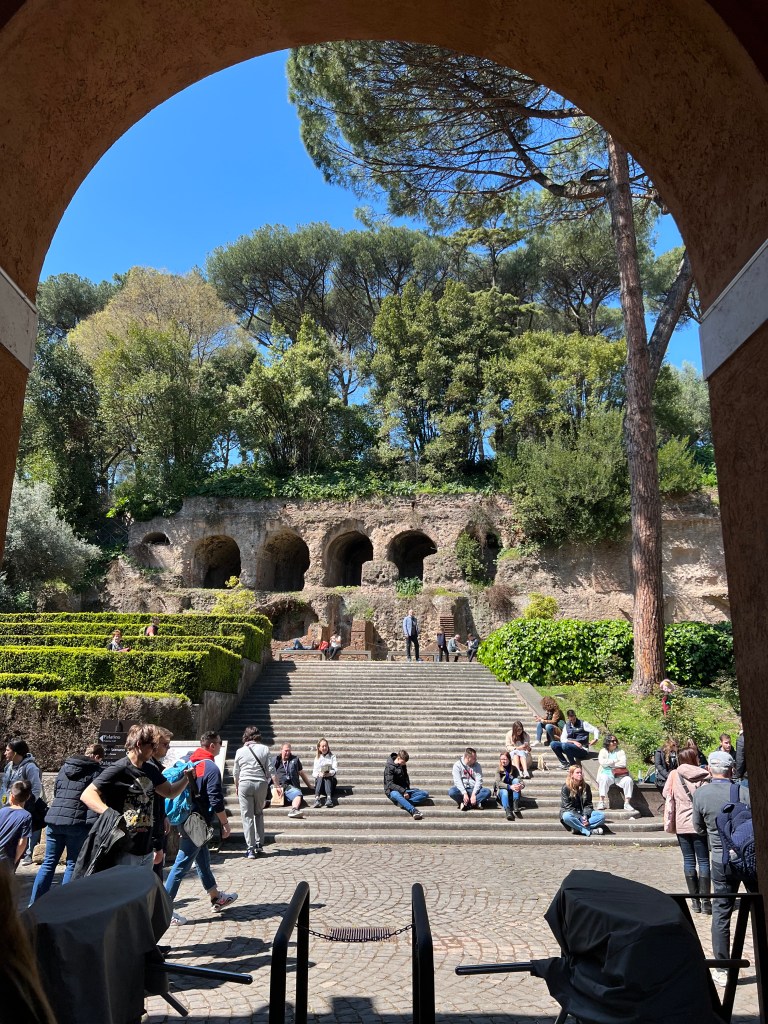
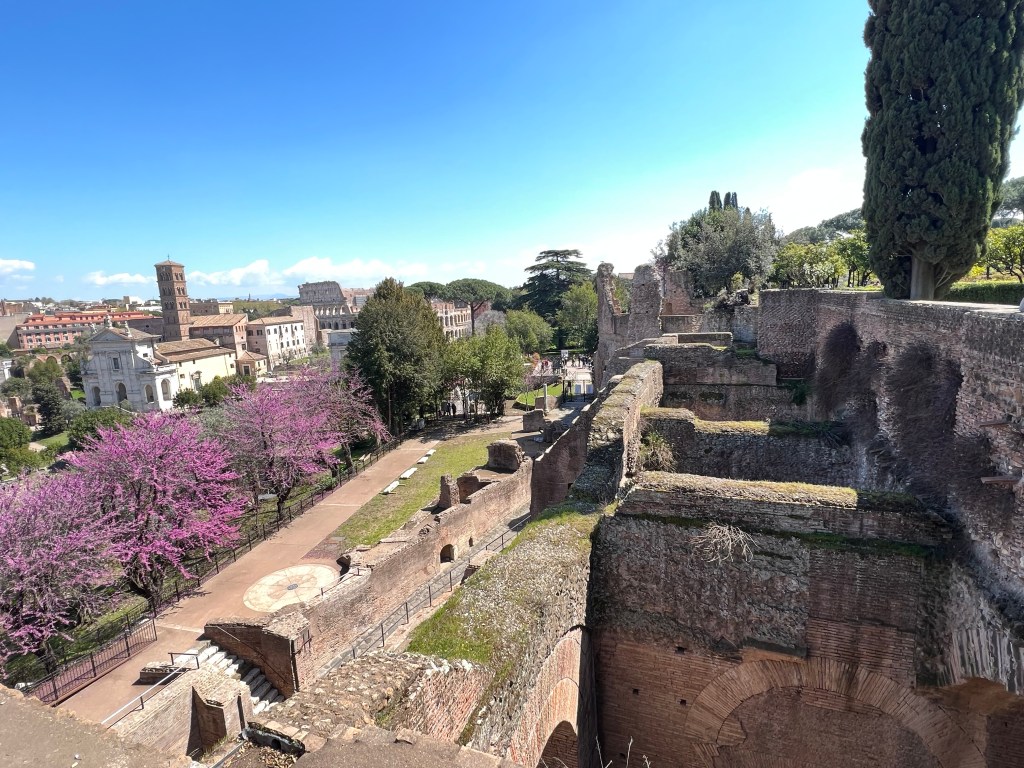
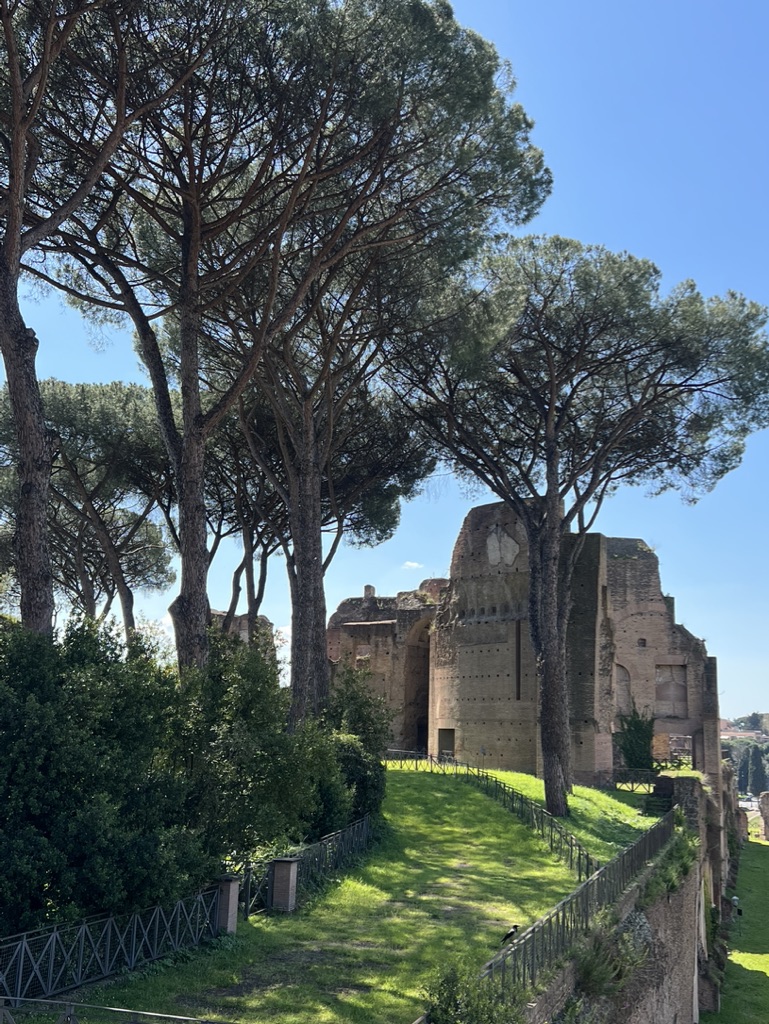
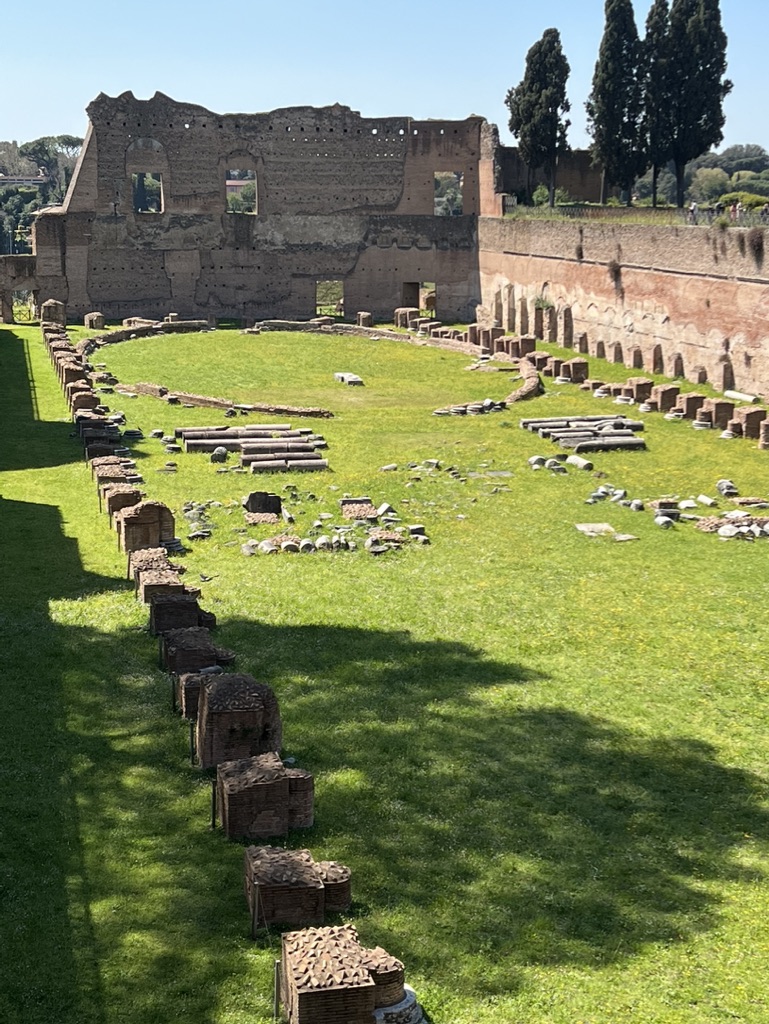
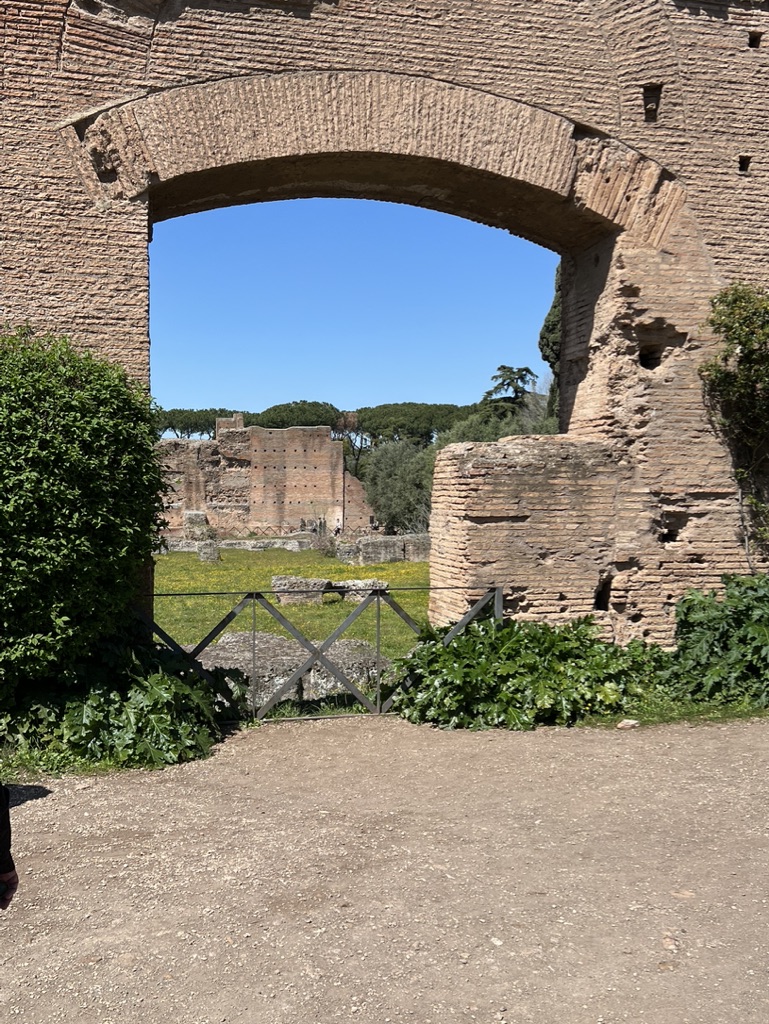
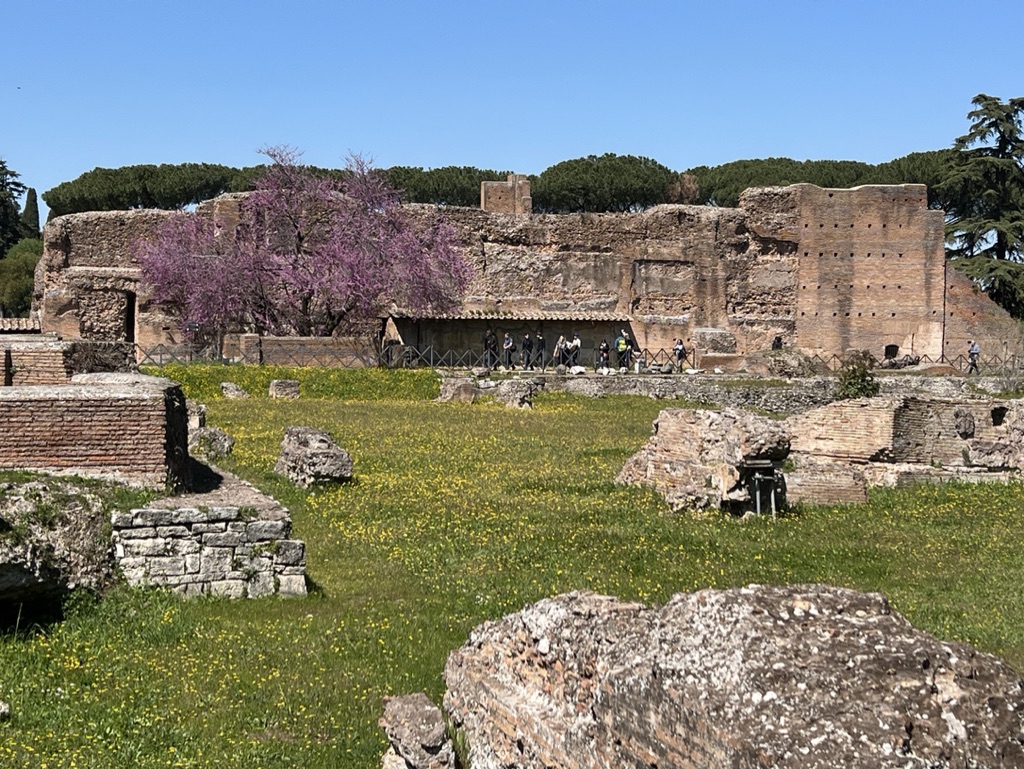
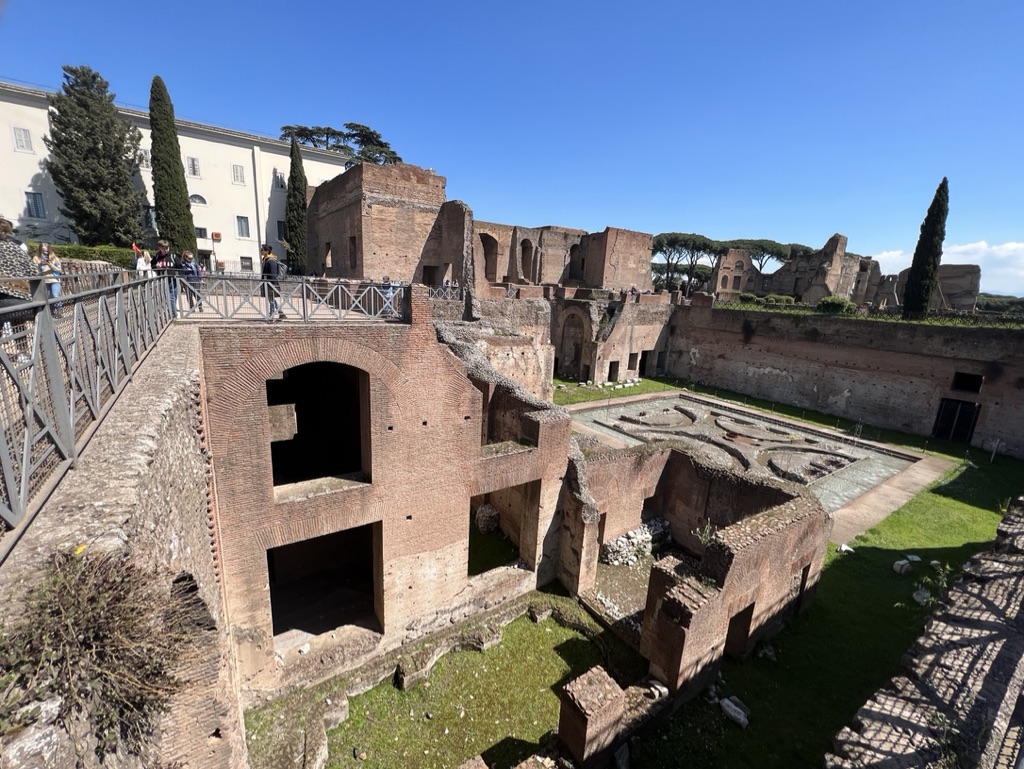
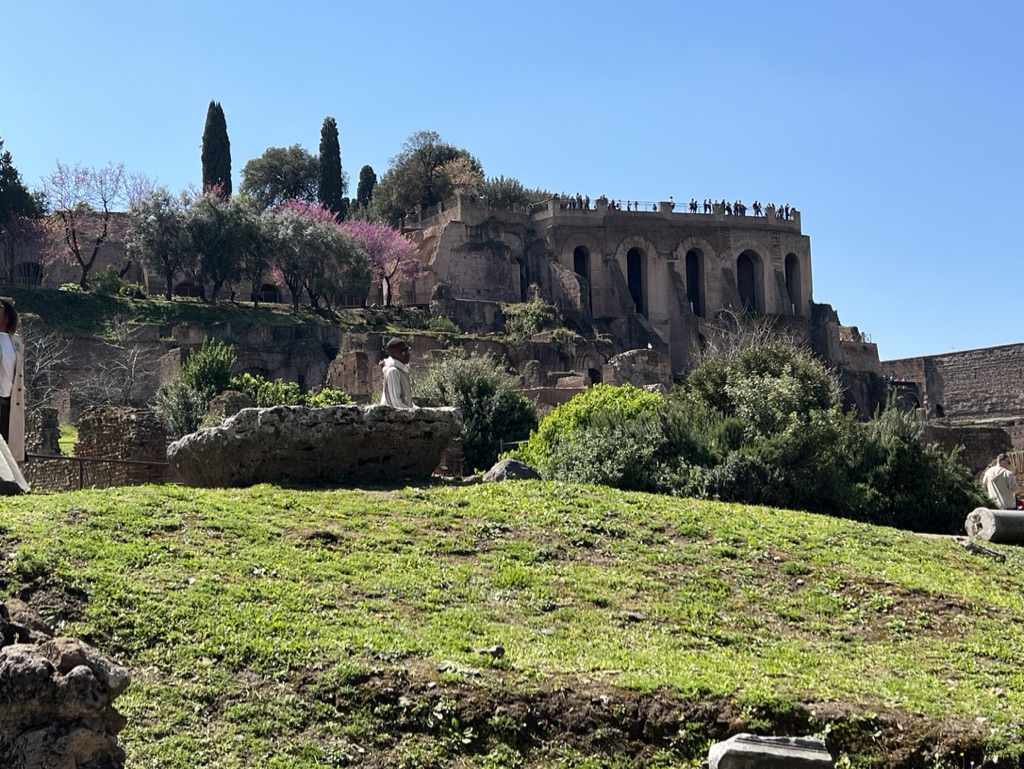
Perhaps you have heard of the seven hills of Rome. Palatine Hill is the centermost of them. This was next on our day’s tour. Now mostly an open air museum where many ruins remain. It was once the area of wealthy Romans’ homes evolving into the exclusive domain of emperors. The ruins of several palaces are what remain on Palatine Hill. There, the views were wonderful. On the highest levels, gazing out, trees with blossoming pink flowers, the springtime green and sunny sky stood in contrast to the ancient building ruins. In the near distance another scenic view of the Colosseum, that I imagine was very similar to someone in 100 AD admiring the same views.
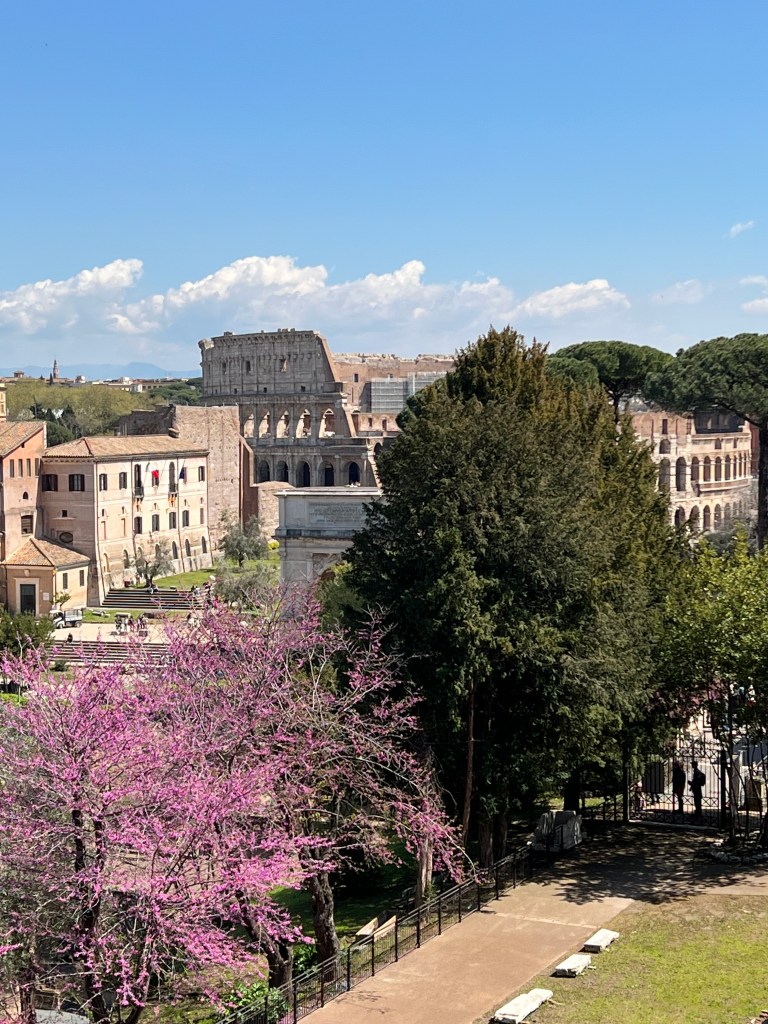
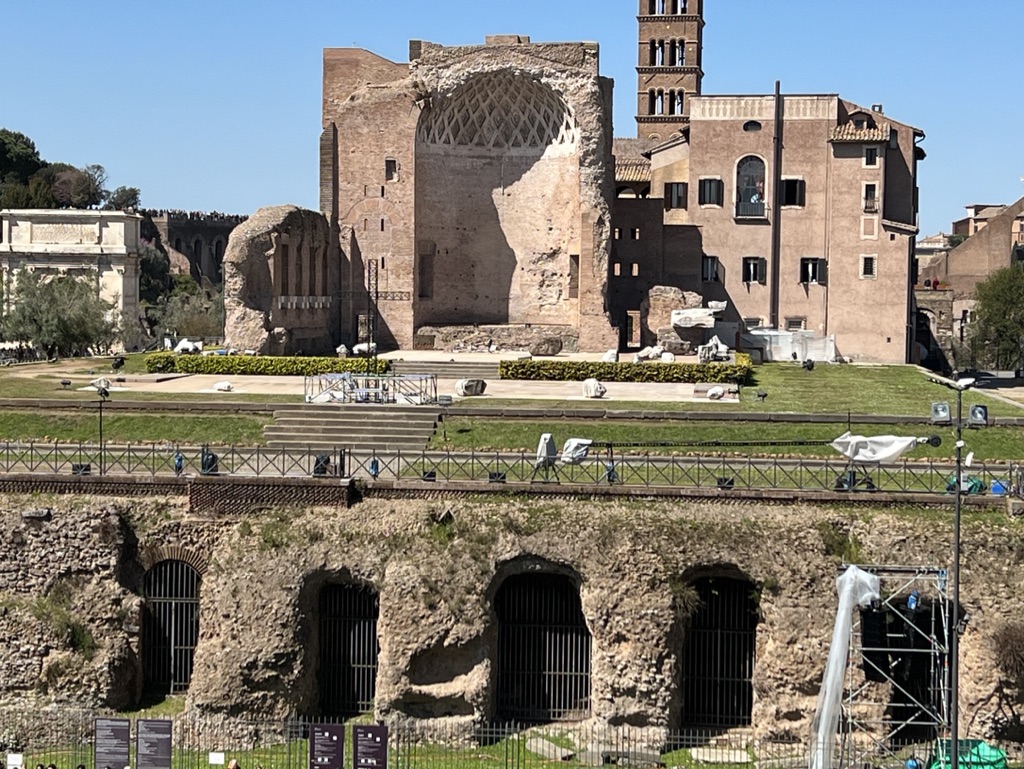
From Palatine Hill we came down into the Roman Forum located in a small valley between Palatine and Capitoline Hills. Here are the remnants of ancient shrines, temples and the royal residence. It would have been the center of ancient Rome and served as the city center where the people of Rome would gather for commercial, political, judicial and religious pursuits. It also served as the place of celebratory military processions called Triumphs. Those processions were very showy, full of pomp and circumstance, resplendent in showing off the victorious military accomplishments as they marched through the Forum.
Click on photos for full size and slideshow:
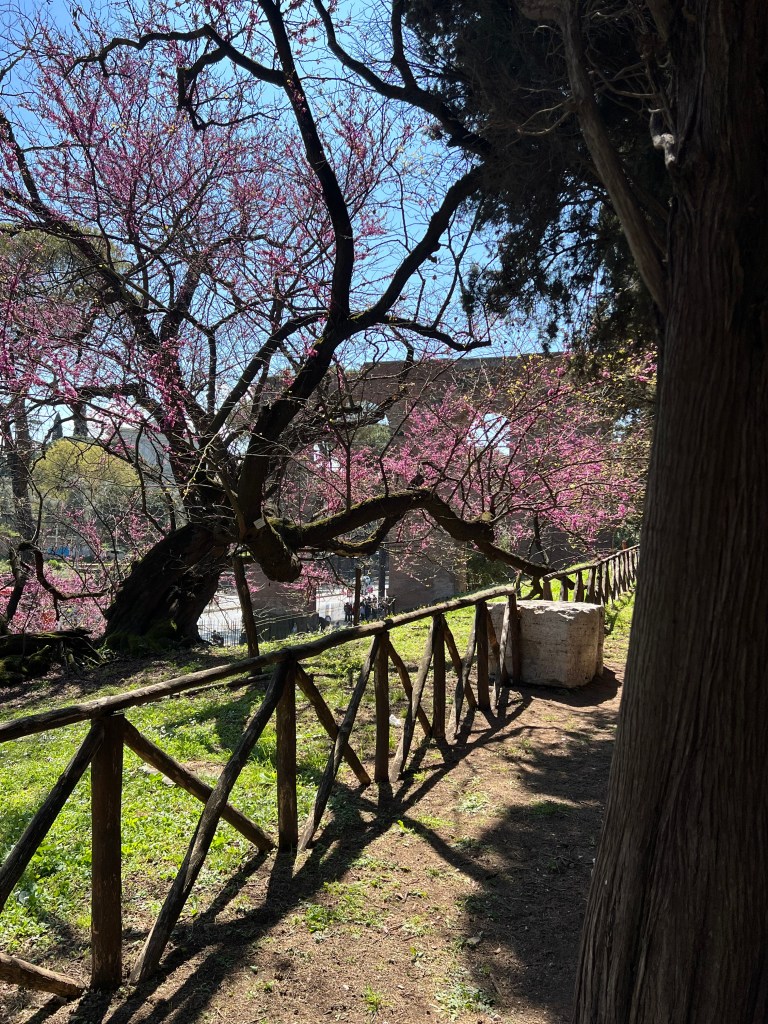
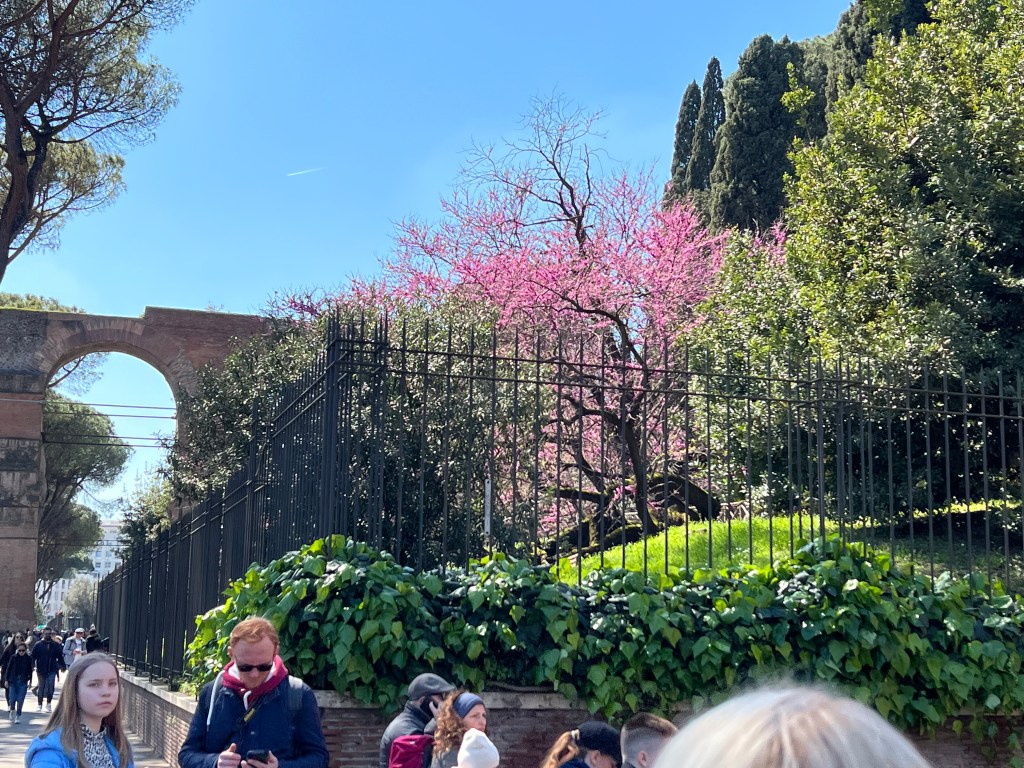


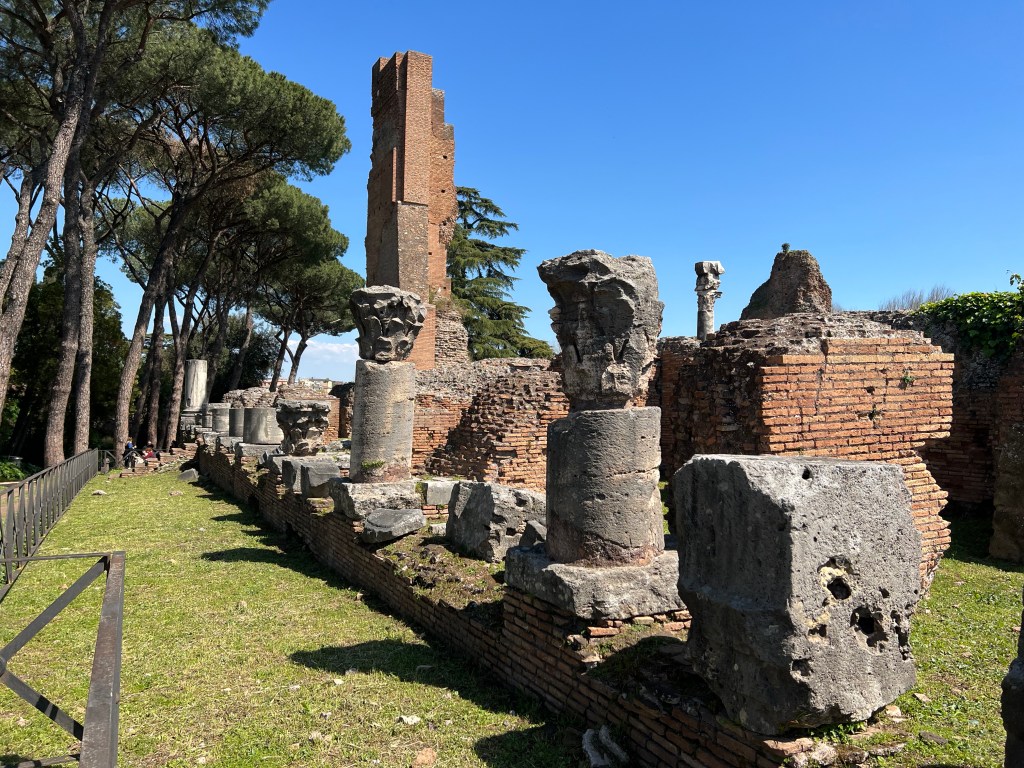
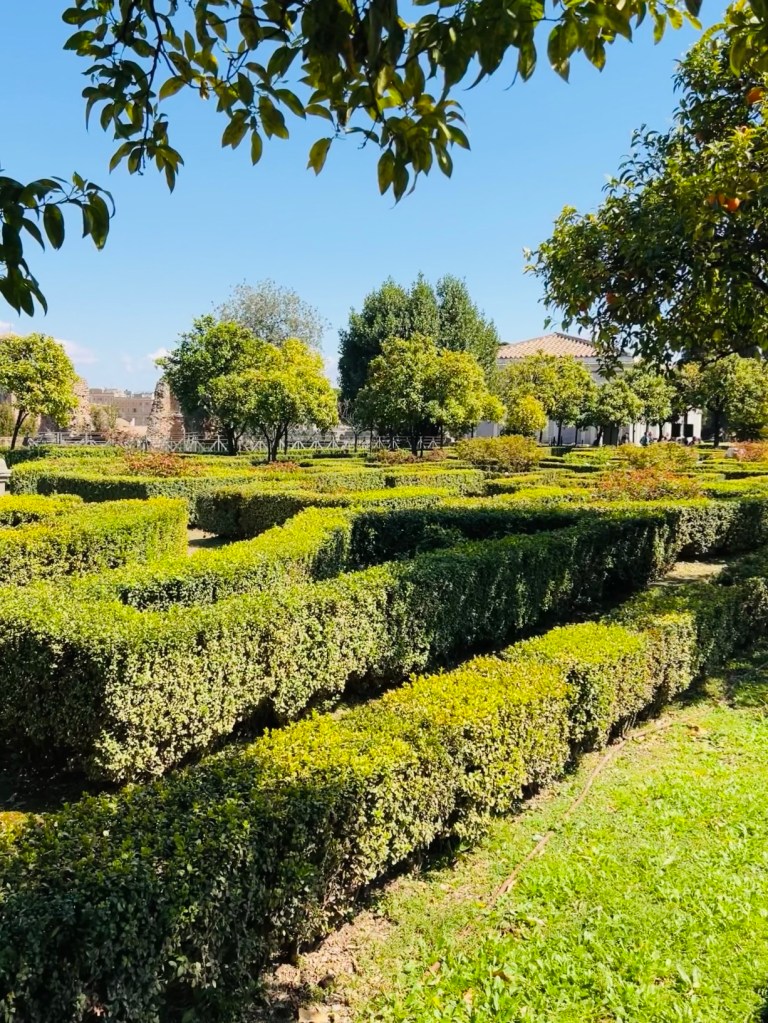
This is where the Senate—as well as Republican government itself—began. The Senate House, government offices, tribunals, temples, memorials and statues gradually cluttered the area.
Famous Romans associated with the Roman Forum include Julius Caesar, Augustus and Constantine the Great who were significant in developing the Forum.
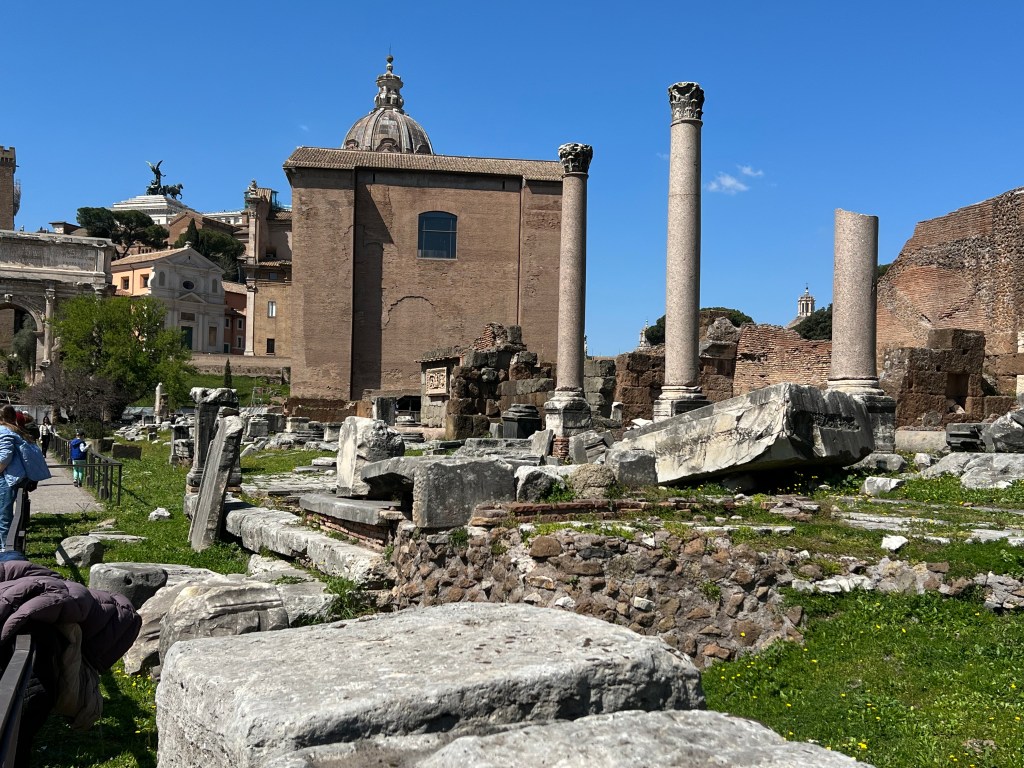
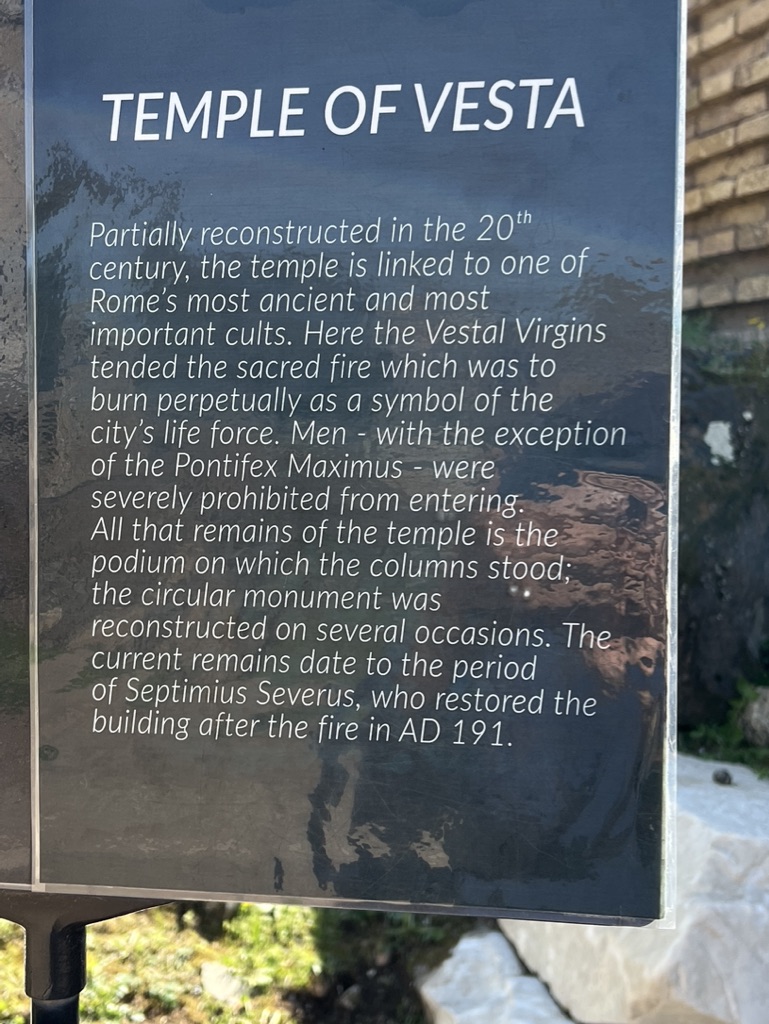
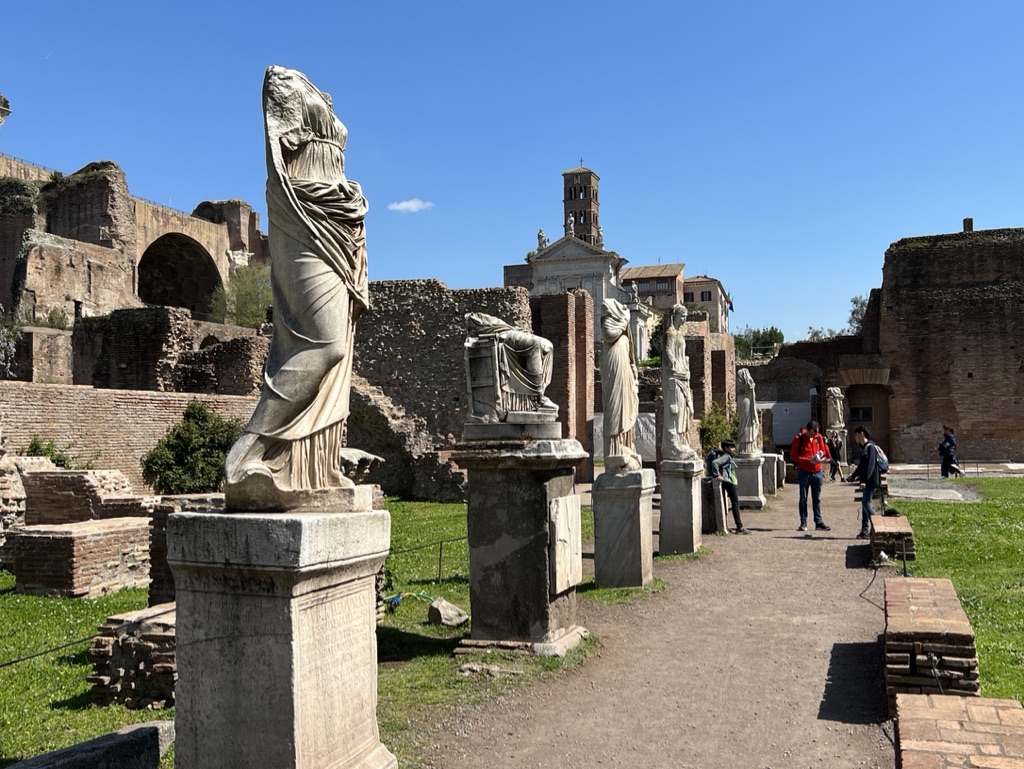
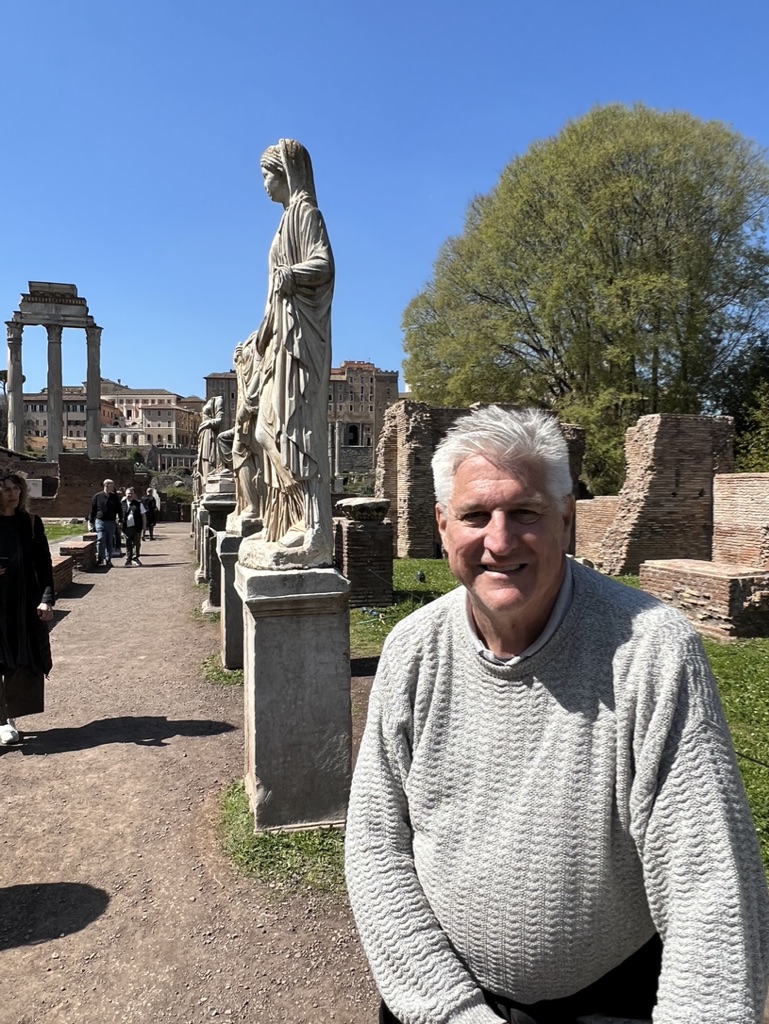
Another part of the Forum that we saw was the remains of the complex of the Vestal Virgins where several vestal virgin statues still stand.
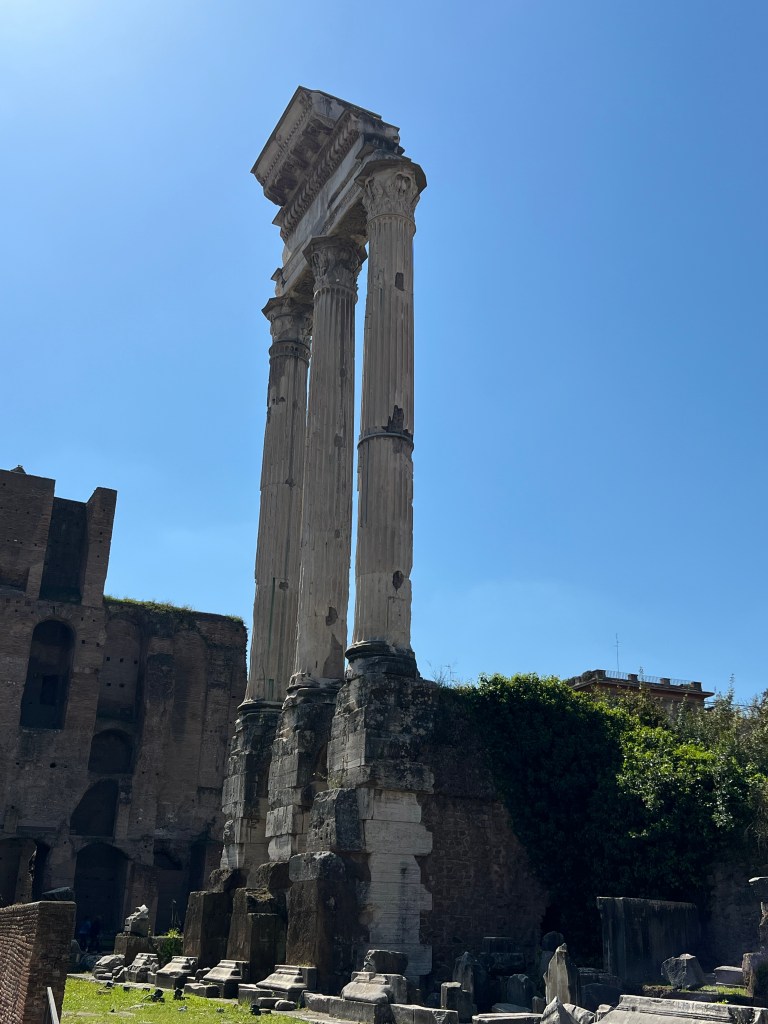
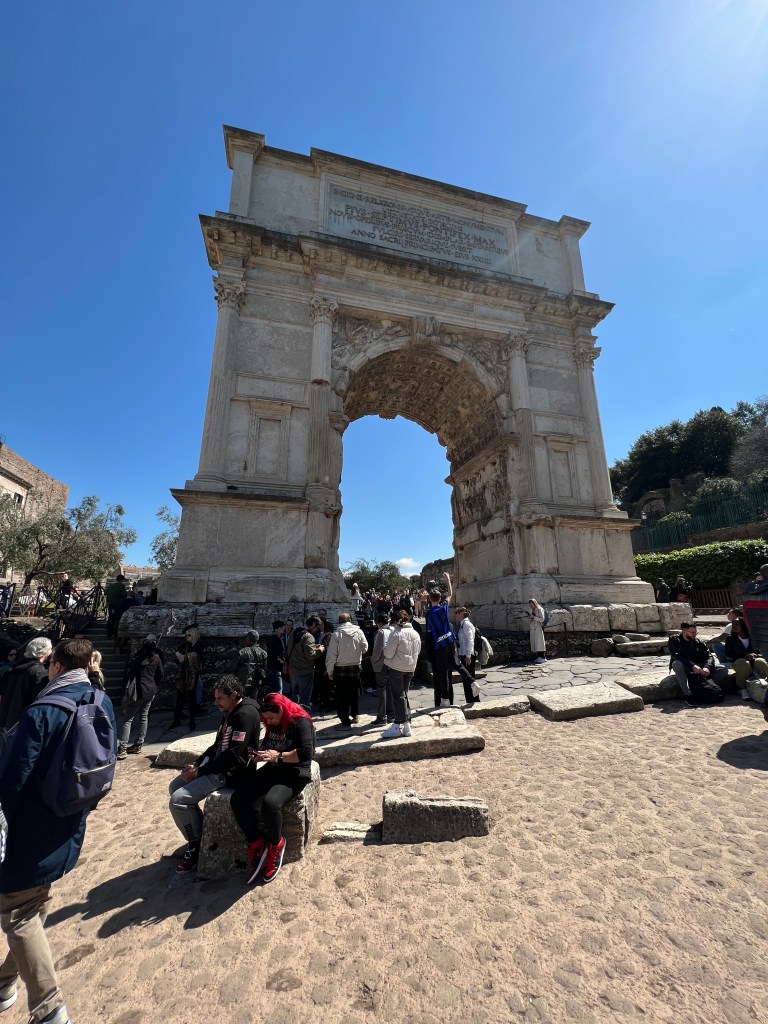
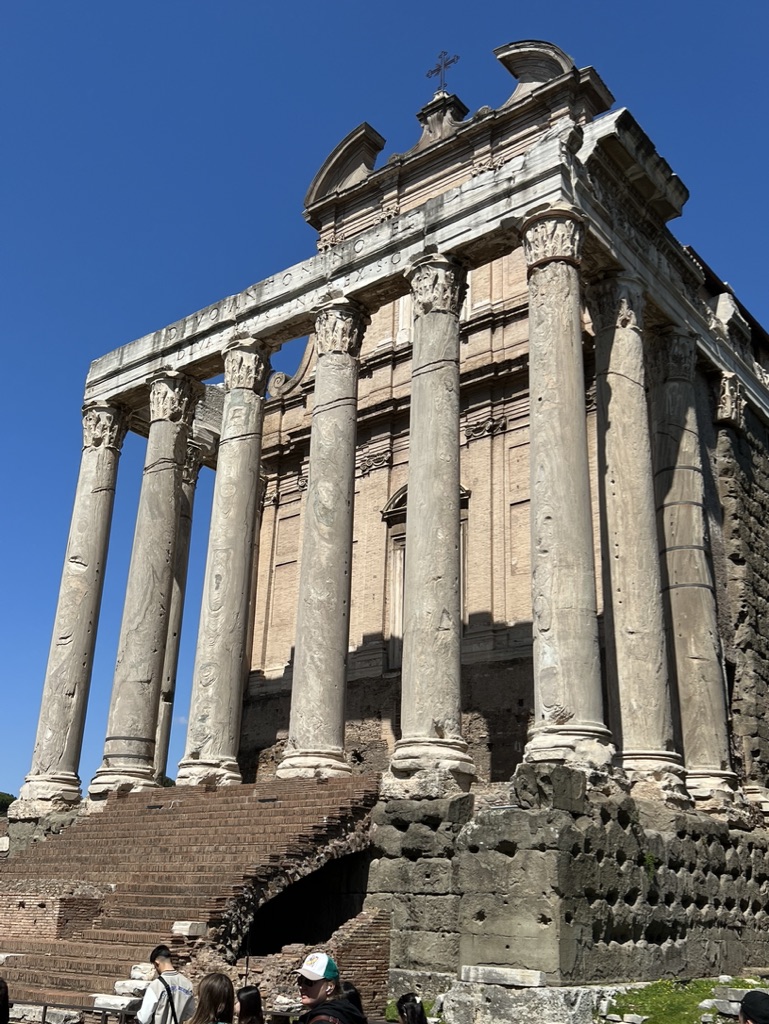
The entire area of the Forum is expansive yet crowded with vestiges of the past – parts of the buildings including portions of columns, marble steps, walls, arches, gardens were scattered about. Several tall stately columns stand erect still bearing parts of the upper cornices.
The entire scene around the Forum is dramatic in appearance now and for when it was a flourishing city center. Most of what is visible is below the current street level where excavations are ongoing.
As we left the area, we continued to see the archeologic digs along the city streets that are uncovering more of what has been buried over many centuries. Taking it all in even as it now exists is extraordinary. What the Roman Empire created and left for our study, contemplation and enjoyment is also a record of this civilization’s creativity and history.
On our walk to our hotel we were happy to enjoy our last afternoon in this wonderful city, stopping by an outdoor cafe where we lunched on a pineapple and ham pizza. Yes, they do serve Hawaiian pizza in Italy!
Early the next morning we would be leaving Rome for our return to the US.
Our driver picked us up and, as a final bow to all the wonders we had seen, he drove us past the Colosseum on the way to the airport.
As a last impression of Italy, it was a fitting conclusion of our truly memorable experiences.
Click on photos for full size and slideshow:




What a fantastic and interesting trip! I have 2 friends who were also in Italy around the same time as you and they were so impressed with Rome (now their favorite city) that they are going back in 2 years. Excellent job with your travelog Don. Thank you for sharing.
LikeLike
I am a little saddened to see this particular travel adventure come to a close. To think how all those thousands of hears ago the buildings they built and what still remains of them. I just blows my mind!!! Thank you for taking me along on this wonderful historic adventure. BIG – Sister, Janice
LikeLike
the photos evoke wonder in me on many levels. Christians slaughtered by lions and was that for entertainment? Gladiator fights, beasts attacking, and the upper crust of Romans enjoying that is mind boggling to me. The building of this famous place had to be done with hundreds of manpower with no bulldozers, cranes, or anything to help it get built… Yet, there it still stands as a testimony to human determination combined with all that beauty. Thanks for my new enjoyment of this mystical city and the time it was built…
LikeLike
Your narrative of your Italy adventure is captivating reading. And the photos are so sharp and clear. As a student of history, I enjoyed your giving us the background on the places you visited. It is so amazing what time has preserved of the places and edifices, not to overlook the skill that went into building them. It is also mind boggling to ponder that those cultures, in spite of their cruelty and barbarity, were advanced in so many other ways. Thank you for sharing this venture with us.
LikeLike