#5- Rough Road Ahead
June 17, 2026 continued.
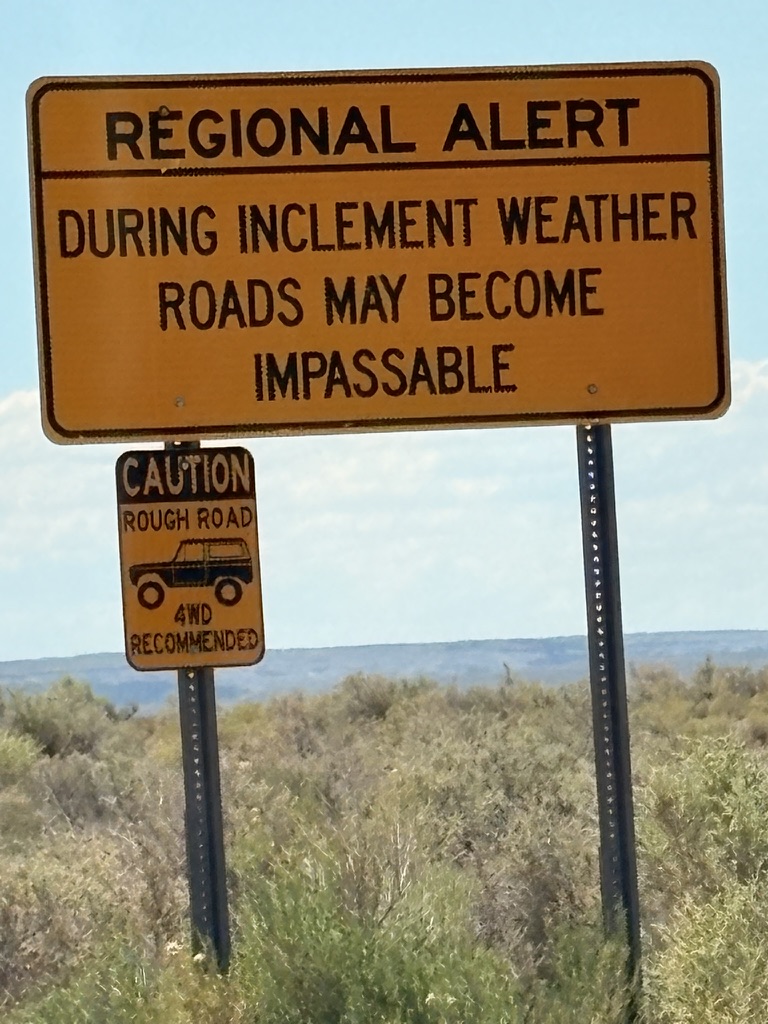
Toroweap Overlook – an even more remote and secluded area over very rough unpaved roads. I had visited there about 5 times previously, the first in 1999 after having rafted the mighty Colorado River with a group of about 20 men.
Reaching Toroweap was a gripping experience; like tightly gripping the steering wheel or the “oh shit!” handles. Nerve-wracking also.
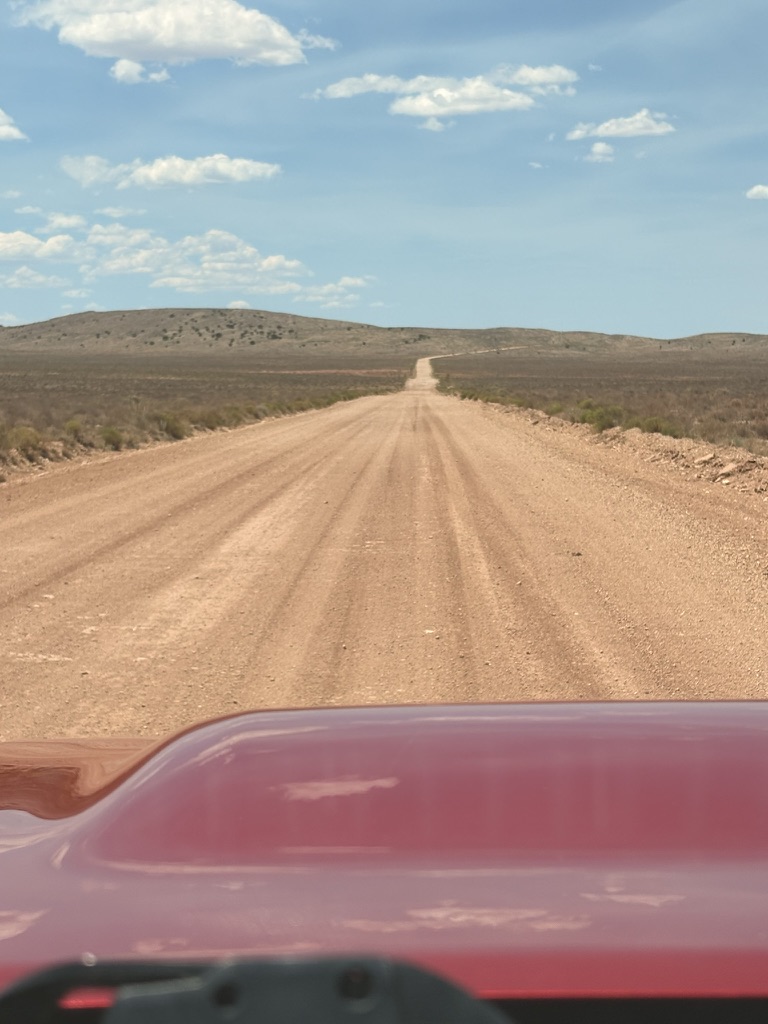
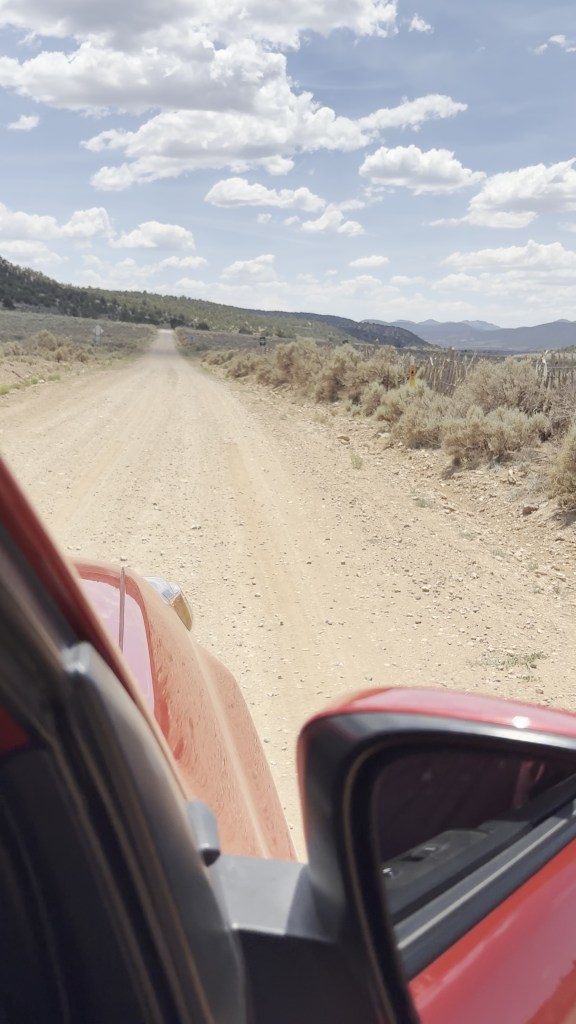
8 miles west of Fredonia, Arizona one will find the Mount Trumbull Road that leads the explorer south 61 miles into the vast empty Arizona Strip and out to the very edge of the Grand Canyon overlooking the Colorado River far below. Signage as one enters that unpaved road cautions (warns?) drivers that the road ahead is rough and 4-wheel drive, high clearance vehicles are recommended. That warning needs to be heeded.
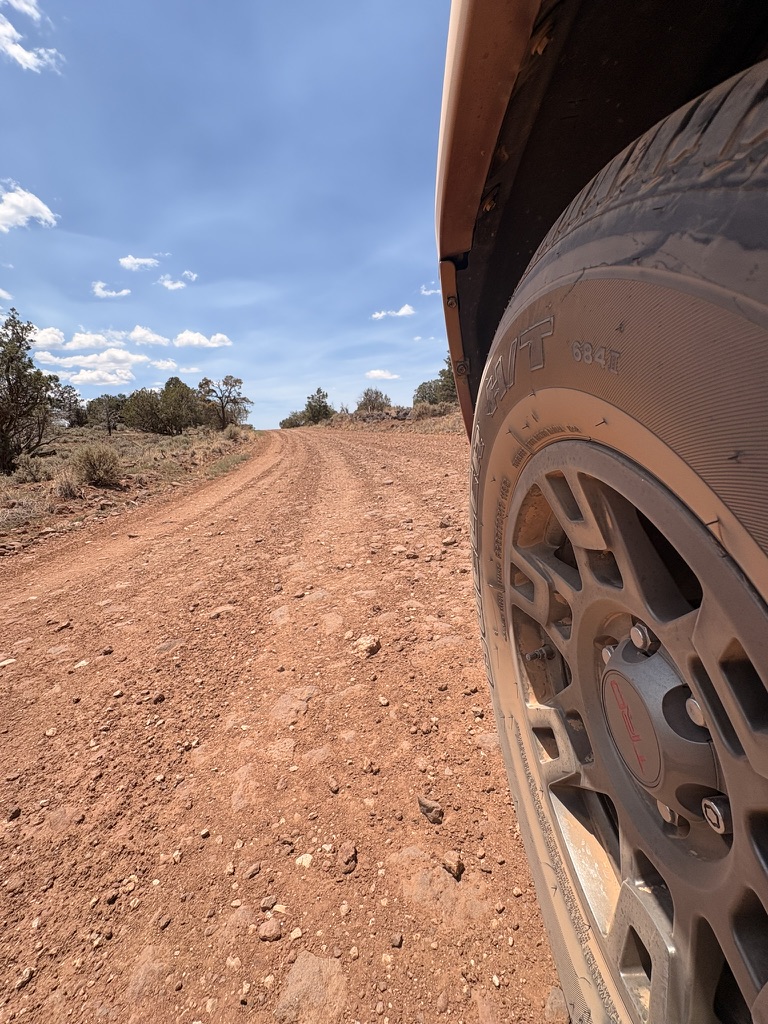
No services are available after leaving the paved highway heading down that long, rough road—no gas stations, water sources, grocery stores, restaurants, or cell service. Having just completed all the safety issues, installing a new battery, in Kanab, Utah, we set forth.
Careful preparation is essential; without it, travelers risk serious consequences, including life-threatening danger. Summer heat greatly increases those risks. Somewhere along the route, I believe I saw a sign warning that vehicle retrievals can cost more than $1,000.
Having a Toyota 4Runner with all new tires and shocks, high clearance, 4-wheel drive, at least 12 gallons of water, food, a full tank of fuel, new battery and my travel companion, Mark B, we were as prepared as we could be to venture forward to the edge of the North Rim of the Grand Canyon. A dose of nerves of steel was also beneficial.
The beginning of the Mount Trumbull Road, although unpaved gravel, looked unassuming. It looked tame enough and was – for a while.
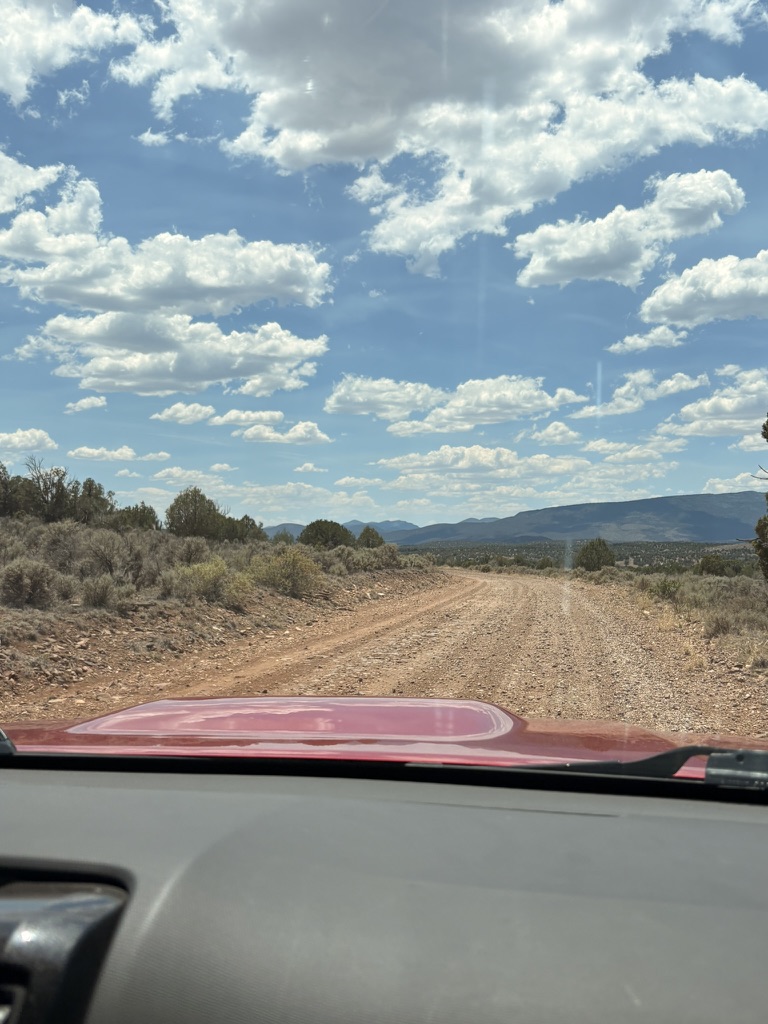
As I wrote previously, the road was rough, even back in 1999 upon my first excursion to Toroweap overlook. At times the surface was quite smooth allowing for more speed, but then rocky surfaces reappeared again diminishing speed to under 20 mph or less. However the road conditions were, the scenery was captivating. Occasionally free-range cattle, some with calves, were grazing or just lying down, with no cares in the world. At times it was wide open grassy plains, or wide expanses of sagebrush, areas of pinion pines and junipers, and then coming over a crest, views of distant mountains that stretched across the horizon. The rocky portions of the road with slow going actually allowed us time to savor the vast expanse all around us. When the sailing was smoother, and then unexpectedly hitting a rough patch, my vehicle might start squirming on the road, its rear end fish tailing a bit until slowing down. And so it went for the next hours.
More than 55 miles in, there is a ranger station, a stop sign and opened gate. In past visits I have stopped there and if a ranger was in residence, would chat a bit before continuing to the overlook and campground. The station consisted of a craftsman style house maybe built in the 1930’s? and some outbuildings. Stopping, we were greeted by a volunteer ranger. Apparently with government cuts, they no longer have National Park rangers on resident duty. This man worked several days consecutively, then was relieved by another volunteer on a schedule. The place had no electricity but had solar panels. He preferred sleeping out on the house porch where it was cooler in the summer. He patrolled a large area, on his bicycle!
I relayed this story to him:
On my first visit to Toroweap in 1999 when driving my new 1999 4Runner. On that trip, as on successive ones, the same cautions were posted as one began the trek toward Toroweap. Along the way I had passed a road grader sitting along the side of the road but gave it little thought. Because of the rocky surface, and about halfway into the drive, 30+ miles, I thought to check my tires. OH, OH! I had a rear tire going soft! Bummer!
As the 4Runner was still new to me, I did not know where to find the spare. Pulling out the owner’s manual, I discovered it and how to lower it. Changing it was no problem. A van approached from the south, its inhabitants offered help, but by then I had the situation under control and soon was on my way. That being my first time on this drive, I started to realize the significance of the warnings at the start of the road.
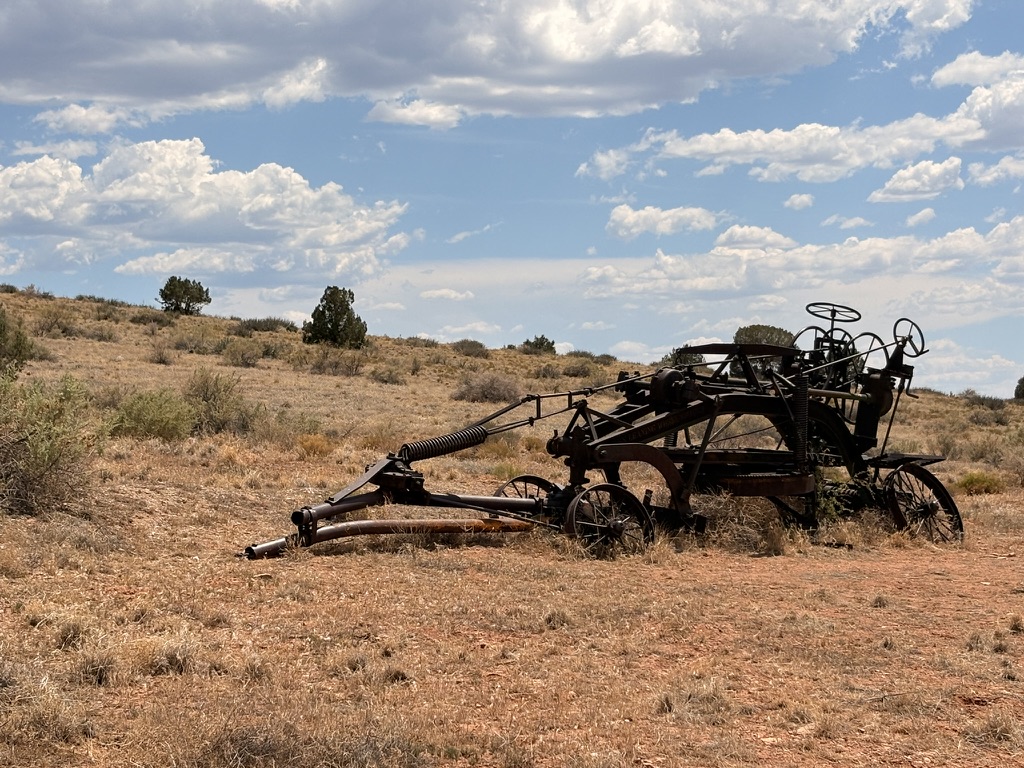
When I approached the ranger station then, in 1999, a ranger was in residence, and we chatted for some time. He asked me if I had seen a road grader along my drive. “Why yes, I did”, whereupon the ranger told me he fixed more flat tires when the road was being graded.
“Whoa, wait! You can fix flat tires?”
“Yes, it’s a plug but will do the job”
“Well then, I have a job for you.”
He explained that road grading broke the rocks and left sharp edges that often punctured tires. I pulled out my flat, and he set to work with tire-changing equipment—removing it from the rim, forcing in a rubber plug, remounting it, and airing it back up. I felt incredibly lucky that the ranger was there and able to fix the problem, and even luckier that I made the trip out without another flat.
This trip, as we talked with the volunteer ranger, I noticed the same well-worn tire-changing device that looked as if it had seen plenty of recent use. It was reassuring to know that travelers with punctured tires might still have some hope to not be stranded way out there.
Subsequent trips to Toroweap were usually without incidence, as I hoped this one would be also. In 2018 I was not able to completely drive to Toroweap as the road condition near to the end was so treacherous over rocky terrain that attempting so would have destroyed the GMC Terrain that I was then driving. I’m sure, with all the protruding rocks and uneven landscape, that that car’s undercarriage would have been ripped off.
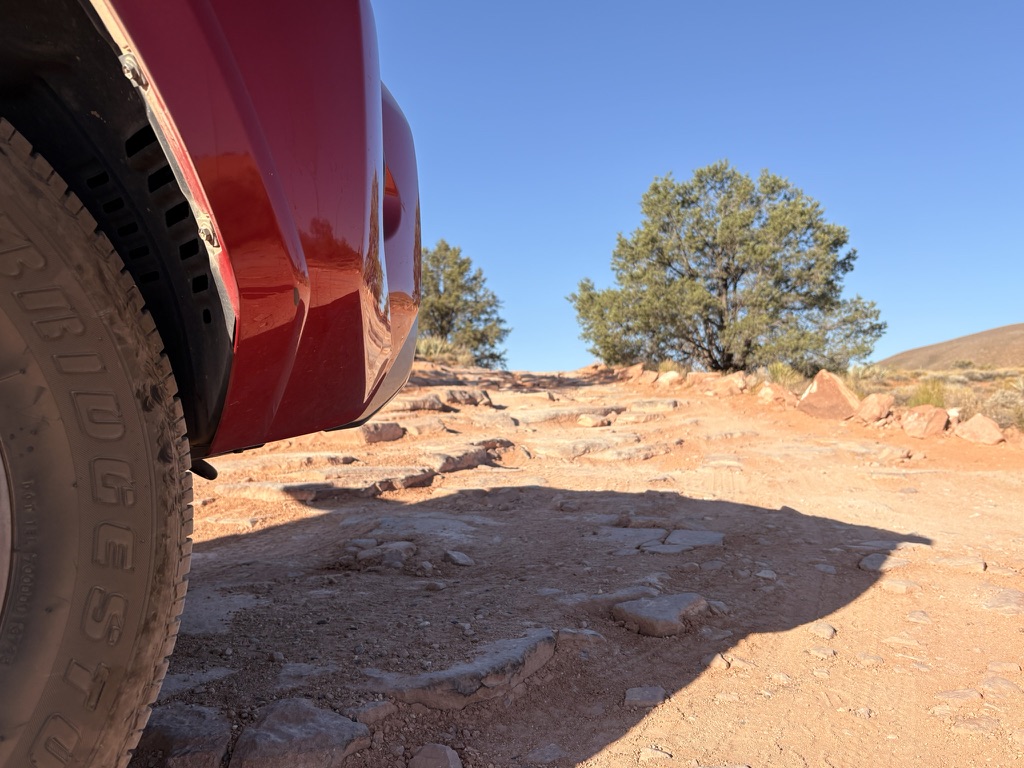
If the first 50-60 plus miles into Toroweap were marked by occasional rough, rocky stretches, the final 3 to 4 miles were truly challenging. Though the road widened into broad, flat rock, its uneven shelves rose and dropped at varying heights, forcing us to crawl forward as the 4Runner twisted side to side, climbing and descending an uneven staircase while bumping and bouncing the whole way.
At one spot the shelf that confronted us stopped me cold. How in the world will I tackle this? Of course I do have 4 wheel drive, but had so seldom used it, that Mark pulled out the owner’s manual, to give me instructions on how to engage it.
Heavy sigh.
OK, here we go – slowly, steadily, surely, we crept up and over the obstacles.
And so, it continued all the way to the campsite area.
Another heavy sigh, as I backed into the flat surface of campsite #1 and stopped.
Relief! We made it!

